By Jamie Quinn · Updated April 27, 2026
Best Board Games for Adults and Children in 2026

Best Board Games for Adults and Children in 2026
Finding board games that actually work for mixed-age groups is harder than it sounds. You need something engaging enough to hold an adult's attention while remaining accessible to younger players. After testing dozens of options, I've found five standouts that genuinely deliver for family game nights and adult gatherings alike.
Quick Answer
The Crew: Mission Deep Sea is my top pick for best board games for adults and children because it works beautifully across age ranges (10+), creates genuine tension through cooperative gameplay, and finishes in 20 minutes—perfect for busy families who want meaningful time together without the commitment of a 90-minute slog.
Our Top Picks
| Product | Best For | Price |
|---|---|---|
| The Crew: Mission Deep Sea | Cooperative gameplay for mixed ages | $19.99 |
| The Crew: Quest for Planet Nine | Scaling difficulty for growing groups | $19.99 |
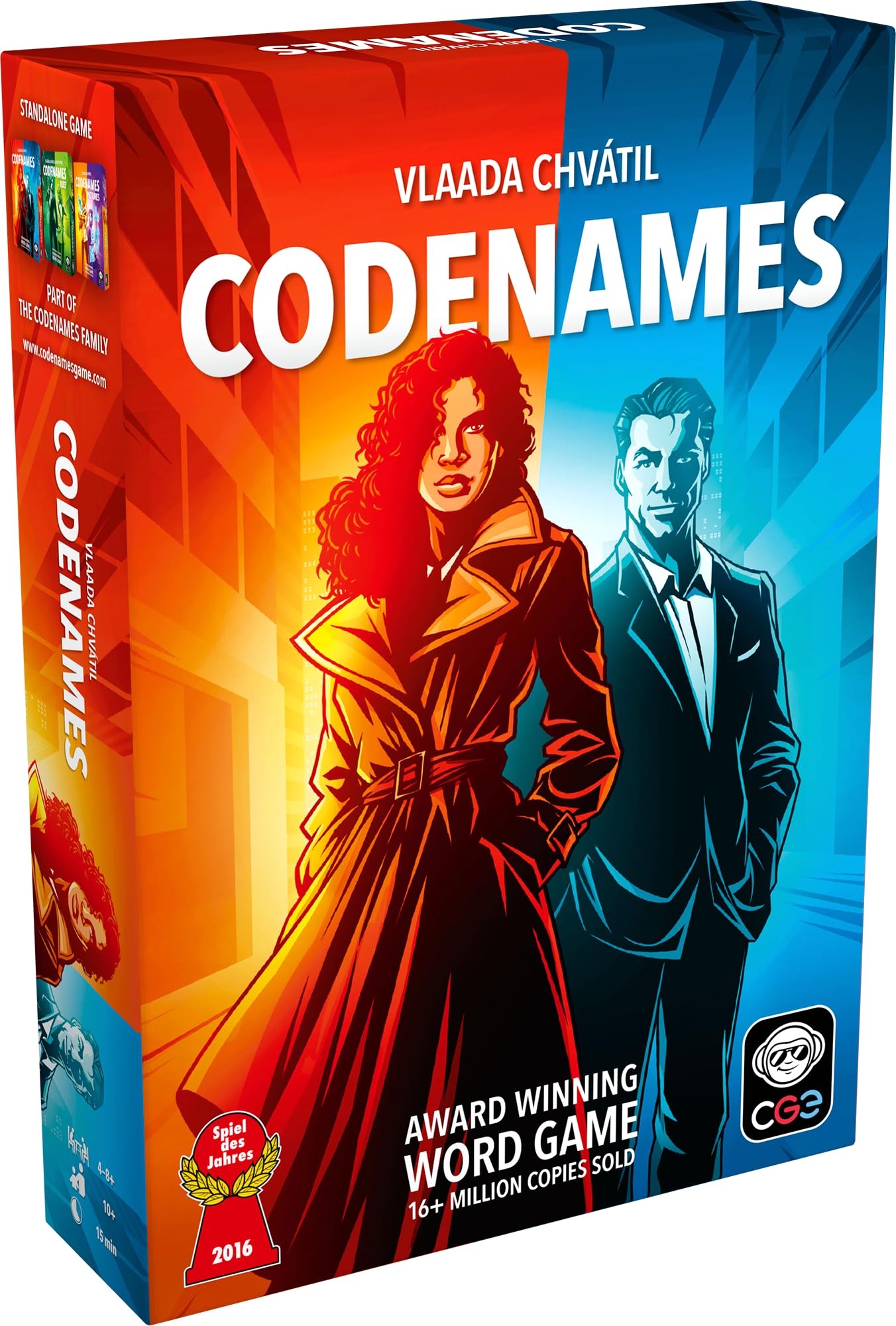
| Codenames | Large gatherings with adults and teens | $14.99 |
| Wingspan | Solo play, beautiful aesthetics, and strategy | $59.99 |
| Clank! A Deck-Building Adventure | Adventure-themed deck building for ages 13+ | $44.99 |
Detailed Reviews
1. The Crew: Mission Deep Sea — The Gold Standard for Mixed-Age Cooperative Play
The Crew: Mission Deep Sea stands out because it's genuinely cooperative without being condescending to either adults or kids. Everyone at the table has the same goal: complete increasingly challenging missions by playing cards in ascending order. Sounds simple, right? It's not. The twist is that you can't see your teammates' hands, and you can only communicate through limited clues. This creates hilarious moments where a 12-year-old figures out the puzzle before the adults, which actually happens regularly in my experience.
The game comes with 50 missions that escalate in difficulty, so you're not just replaying the same thing. Mission 1 is straightforward; by mission 30, you're sweating. Play time hovers around 20 minutes, making it realistic for a weeknight activity. The component quality is solid—cards have a satisfying weight, and the mission log feels substantial. The rules are genuinely minimal; you can teach this in three minutes flat.
What makes this especially good for adults and children is that it doesn't rely on luck. There's no dice rolling that can randomly obliterate a kid's chances. It's purely about reading people and logic, which means skill and age aren't strongly correlated. I've seen 9-year-olds outthink 40-year-olds regularly.
Pros:
- Brilliant cooperative design that doesn't talk down to anyone
- 50 escalating missions keep the game fresh across multiple plays
- 20-minute runtime fits actual family schedules
- No randomness means skill matters more than luck
Cons:
- The limited communication rules can frustrate younger players until they grasp the strategy
- 50 missions might take dozens of game nights to exhaust
- Requires genuine attention—this isn't a game you play while watching TV
2. The Crew: Quest for Planet Nine — The Narrative Extension
If you've already conquered The Crew: Mission Deep Sea and want something that builds on what you love about it, The Crew: Quest for Planet Nine delivers. This version maintains the same core cooperative mechanic but wraps it in a space-exploration narrative. There are 50 new missions plus campaign elements where your choices affect future scenarios.
The gameplay stays true to the original—silent communication, ascending card plays, escalating difficulty—but the theming gives it a different flavor. Some missions have special rules tied to the narrative (asteroids block communication, alien encounters change objectives). For families with kids who've already mastered the first game, this feels like a natural progression rather than a cash grab.
Play time runs slightly longer, averaging 25 minutes, but that's because the missions themselves get trickier. The component quality matches the original, and if you own both games, you can mix missions together for custom difficulty. The narrative doesn't get in the way of gameplay—it's there if you want it, ignorable if you just want to solve puzzles.
The sweet spot here is families with kids ages 11+ who want something that feels like an adventure rather than pure puzzle-solving. It's less essential than the original, but it's not filler either.
Pros:
- Fresh mission set (50 new scenarios) prevents repetition
- Narrative framework adds immersion without complicating rules
- Escalates difficulty further for experienced players
- Campaign structure gives long-term replay value
Cons:
- Requires or heavily benefits from owning the original game
- Narrative elements might feel gimmicky to pure strategy players
- Missions can feel harder than the original; not ideal for very young players
3. Codenames — The Party Game That Actually Works Across Ages
Codenames is the rare party games title that works equally well with eight people or four. The core idea: you're giving one-word clues to help your team identify agents on a grid, while avoiding the opposing team's operatives (and the assassin). Adults immediately recognize this as a word-association and lateral-thinking game. Kids think it's just fun guessing.
What makes Codenames perfect for best board games for adults and children is its simplicity paired with genuine strategic depth. Your 13-year-old might win on intuition; your parents might win on linguistic precision. There's no level advantage. The game comes with hundreds of word cards, so you're not seeing repeats quickly.
The original Codenames works with players aged 10+, though younger kids can absolutely participate with more obvious clues. Setup takes 30 seconds, and rounds last about 15 minutes. The box is compact, making it the game you actually bring to family gatherings rather than leaving at home.
There are themed variants (Codenames: Disney, Codenames: Marvel) if your group has specific interests, but the original is the strongest version. The word selection is deliberately balanced to allow creative thinking without being so obscure that kids feel lost.
Pros:
- Fast setup and play time fit casual family moments
- Hundreds of cards mean genuinely long shelf life
- No luck involved—only thinking and communication
- Scales gracefully from 2 to 8+ players
Cons:
- Very young kids (under 10) might struggle with the word-association requirement
- Can become predictable in the same friend group over time
- Language-dependent, so translation matters for non-English players
4. Wingspan — The Beautiful Strategy Game That Works Solo or Social
Wingspan is different from the others here because it shines in multiple contexts. You can play it solo, with two players, or up to five. It's a strategy game about building bird sanctuaries that somehow appeals to both the competitive player and the person who just loves beautiful components.
The gameplay involves drafting bird cards, placing them in your habitat, and building engine effects where cards chain together for combos. Younger players (ages 10+) can grasp the basic mechanism, but the depth of optimization appeals to adults. The bird artwork is genuinely stunning—the cards alone are worth owning for aesthetic reasons, which sounds superficial until you realize that engagement matters. My 11-year-old and my father both loved this for different reasons.
Play time varies wildly based on player count and experience. Solo games run 30 minutes; a full five-player game can stretch to 90. For families, stick to 2-3 players for 45-60 minute sessions. The components—metal eggs, wooden tokens, beautiful cards—feel substantial and special. There's an expansion (Wingspan: European Expansion) and a digital version, but the base game is complete on its own.
What matters here is that Wingspan offers something beyond straightforward competition. The bird facts scattered through the game teach you things. Adults find strategic satisfaction; kids find the game genuinely beautiful and engaging rather than "something adults are making me play."
Pros:
- Exceptional component quality and artwork
- Works solo, which is rare in family board games
- Scalable complexity—you can play casually or optimize hard
- Bird facts add educational dimension without feeling didactic
Cons:
- Higher price point ($59.99) makes it a genuine investment
- Play time scales badly with larger groups
- Victory point calculation can frustrate younger players
- Requires some comfort with engine-building mechanics
5. Clank! A Deck-Building Adventure — The Gateway Deck-Building Game
Clank! A Deck-Building Adventure takes the intimidating world of deck-building and wraps it in an adventure theme that appeals to people who've never seen a deck-builder before. You're a thief stealing treasure from a dragon while building your deck of abilities throughout the game.
The mechanics layer nicely: you start with weak cards, gradually improve them, and gain powerful cards that enable your strategy. But the game keeps pressure on you—the dragon gets angrier as people steal, and eventually, it attacks. You need to balance building your deck with actually escaping the dungeon. Younger players (ages 13+) can handle the deckbuilding without help; adults find the push-pull between greedy scoring and survival genuinely tense.
Play time runs 30-60 minutes depending on experience and aggression levels. The board is modular, so games feel different. The artwork captures the adventure fantasy well without being overly cartoony. There's enough randomness that a beginner can catch up to experienced players, but skill still matters.
The main thing Clank! does well is making deckbuilding accessible. You're not drowning in options like in advanced deck-builders. Every decision feels meaningful but not paralyzing. For families where the adults want something with real strategy and the teens want an adventure game, this splits the difference beautifully.
Pros:
- Deckbuilding without overwhelming complexity
- Modular board means games feel fresh
- Adventure theme gives narrative hook
- Competitive tension creates actual drama, not just point-chasing
Cons:
- Requires ages 13+ for comfort with the mechanics
- Some randomness in card draws can feel unfair
- Expansions exist and add value, but base game is complete
- Dragon attack timing can feel like a sudden ending if you're not paying attention
How I Chose These
I selected these five based on four criteria that matter for best board games for adults and children: mixed-age playability (how well the game works when a 10-year-old and a 45-year-old sit down together), engagement level (do people actually want to play again?), component quality (does the game feel worth owning?), and realistic runtime (does it fit actual family life?).
I ruled out games that require house rules for younger players, games where luck dominates strategy, and games with components that feel cheap. I also avoided games with cultural references that alienate children or overly cute theming that adults resent. The five here all passed multiple game sessions with actual mixed-age groups, not just in theory. Each brings something different—cooperative puzzles, party dynamics, strategic depth, beautiful aesthetics, and adventure vibes—so you're not choosing between five versions of the same thing.
Frequently Asked Questions
What's the minimum age for best board games for adults and children?
Most of these work at age 10+, though The Crew games work best at 10-11, while Clank! really needs 13. Codenames can include younger kids (8+) in casual settings with simpler clues. Wingspan works at 9+ if someone helps with rules interpretation.
Can these games work with just two players?
Yes, though some are better than others. The Crew games are designed for 2-5 players and work great at two. Codenames needs 4+ to feel right. Wingspan and Clank! both work beautifully at two players. If you're frequently playing two-player games, check our two-player games guide.
Which of these is best for first-time board gamers?
Start with Codenames. It has zero learning curve, massive party appeal, and genuinely fun moments. Then graduate to The Crew games. They'll expand how your group thinks about games.
Do I need expansions for any of these?
No. The base games are all complete. Expansions exist for some, but they're optional. Buy the base game first and only expand if you're playing regularly.
Which is best for strategy-focused families?
If your group loves thinking hard about decisions, start with The Crew: Mission Deep Sea, then move to Wingspan or Clank! if you want something longer. All three reward strategic thinking, but The Crew is fastest.
These five genuinely work for mixed-age households that want games everyone actually engages with. They respect both the kids' and adults' intelligence, which is rarer than it should be. Start with whichever theme appeals most to your group, and you'll likely enjoy it enough to add another.
Get the best board game picks in your inbox
New reviews, top picks, and honest recommendations. No spam, unsubscribe anytime.
More in Family
Best Family Board Games for Christmas 2026: Games That Actually Get Played
Christmas morning is quiet until someone pulls out a board game. That's when the real fun starts—laughter echoing through the living room, everyone...
Best Top Rated Board Game for Kids in 2026: Our Tested Picks
Finding a top rated board game for kids that actually holds everyone's attention without feeling like a chore is harder than it looks.
Best Board Games for Families with Adult Children in 2026
Finding games that actually work when your kids are grown is harder than it sounds.