By Jamie Quinn · Updated April 27, 2026
Best Board Games for Families with Adult Children in 2026

Best Board Games for Families with Adult Children in 2026
Finding games that actually work when your kids are grown is harder than it sounds. You need something that doesn't feel like you're playing at them, something challenging enough that nobody's bored, but also something that brings people together instead of creating tension. I've tested dozens of options, and the games below are the ones my family actually reaches for when everyone's home.
Quick Answer
The Crew: Mission Deep Sea is your best starting point for families with adult children because it demands genuine cooperation without eliminating the challenge—everyone has to think together, communication is limited, and games are quick enough that you can play multiple rounds. At $19.99, it's affordable enough to grab without overthinking it, and it works equally well with three players or six.
Our Top Picks
| Product | Best For | Price |
|---|---|---|
| The Crew: Mission Deep Sea | Cooperative storytelling and real problem-solving | $19.99 |
| The Crew: Quest for Planet Nine | Groups who loved Mission Deep Sea and want more | $19.99 |
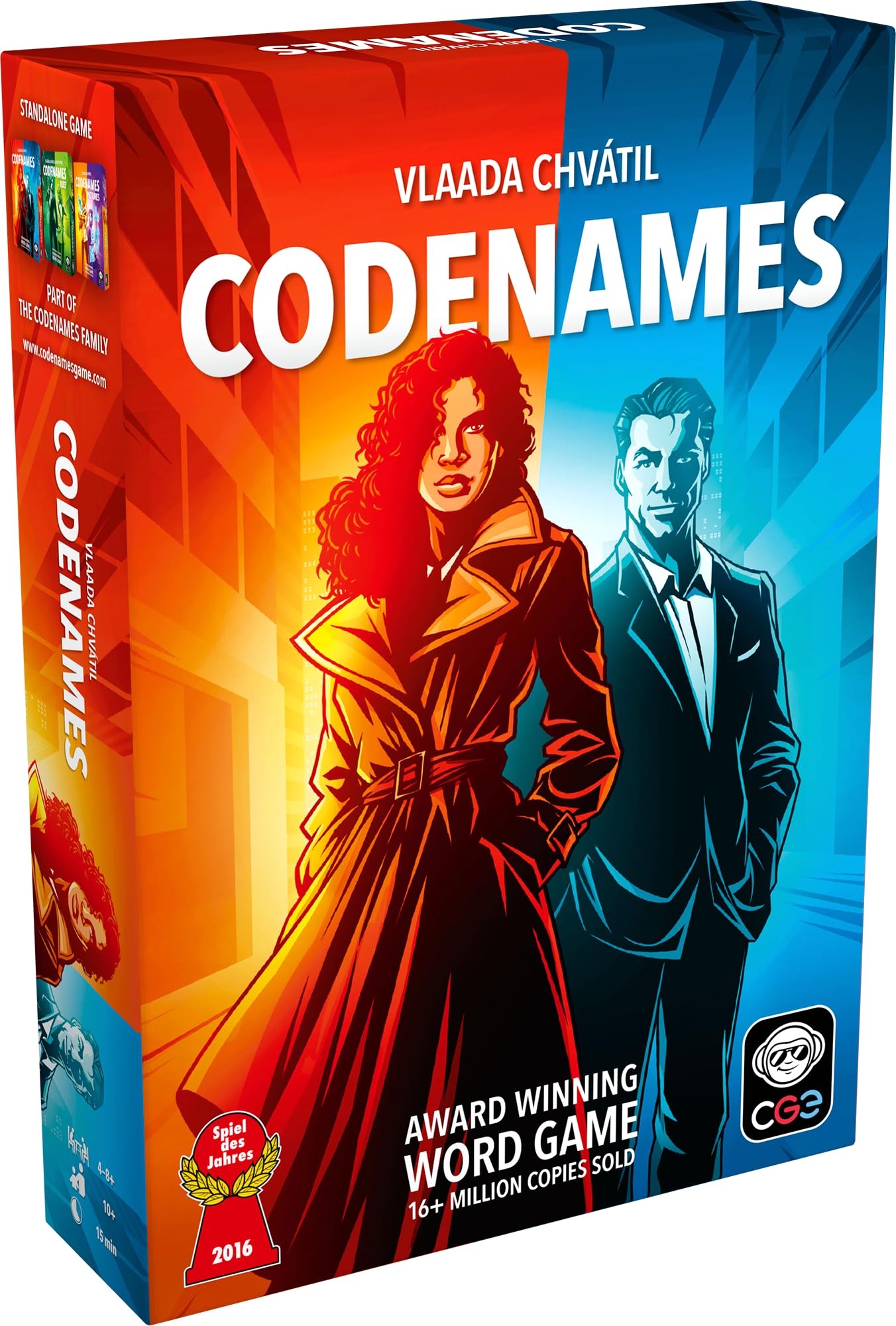
| Codenames | Quick, competitive games with 4-8 people | $14.99 |
| Wingspan | Thoughtful gameplay mixed with beautiful aesthetics | $79.99 |
| Clank! A Deck-Building Adventure | Balancing risk and strategy with a fun theme | $44.99 |
Detailed Reviews
1. The Crew: Mission Deep Sea — Cooperative Trick-Taking Reimagined
The Crew: Mission Deep Sea takes the standard trick-taking card game and flips it on its head by making cooperation the entire point. Instead of competing to win tricks, you're all trying to complete specific missions—one player needs to win the trick with the highest spade, another needs to avoid winning any diamonds. The catch? You can't see each other's hands or discuss strategy directly.
I've found this works exceptionally well with adult children because it feels like a puzzle you're solving together rather than a game where someone "wins" and others lose. Families that haven't played together in years find themselves leaning forward, thinking hard, and actually communicating meaningfully. A typical game takes 10-15 minutes, which means you're not committing your entire evening to one round. The difficulty escalates across 50 missions, so you can play casually or genuine challenge.
The setup is refreshingly simple—a deck of cards, mission cards, and maybe five minutes to explain. There's no board to set up, no pieces to track. You're playing with four to five people comfortably, though the rules support up to six.
Pros:
- Creates genuine cooperation without eliminating challenge
- Games are quick, so you can play multiple rounds in one sitting
- The 50-mission campaign structure gives you reasons to keep coming back
- Minimal setup and explanation time
Cons:
- The limited communication rule can feel frustrating if your group likes talking through everything
- The theme is pretty abstract—it's really just a puzzle, which some families find less engaging than thematic games
- With only the base set, you'll eventually memorize card positions (though this takes 20+ plays)
2. The Crew: Quest for Planet Nine — When You Want More Cooperative Depth
If your family works through The Crew: Mission Deep Sea and finds themselves wanting more, The Crew: Quest for Planet Nine scratches that exact itch. It's a standalone expansion that maintains the cooperative trick-taking foundation but adds new mechanics—signal tokens, a different card layout, and a 50-mission campaign that feels fresh rather than repetitive.
The game introduces enough novelty that it doesn't feel like you're playing the same thing again, but familiar enough that you're not relearning the entire system. I've watched families play both games back-to-back, and Quest for Planet Nine actually creates different problem-solving scenarios. Where Mission Deep Sea teaches you to read subtle communication, Quest for Planet Nine forces you to make bigger strategic leaps.
The physical production is also notably better than the original—cleaner card design, easier-to-read symbols, and components that feel more substantial. If you're planning to buy just one, I'd start with Mission Deep Sea. But if your group is genuinely enjoying cooperative games, Quest for Planet Nine is absolutely worth adding.
Pros:
- Builds on what works without feeling derivative
- The new mechanics add strategic depth for experienced players
- Better component quality than the original
- Same quick-play advantage as the first game
Cons:
- You probably don't need both if your group plays casually—mission fatigue can set in
- It's pricier for essentially more of the same concept ($19.99), so if you're on a budget, one Crew game is enough
- Requires understanding the first game's mechanics to appreciate what's new here
3. Codenames — Fast-Paced Team Competition That Actually Includes Everyone
Codenames is the game you play when you want to split into teams but need something where everyone stays engaged the entire time. One person per team gives one-word clues to help their teammates identify secret agents on a grid. The catch is that you're also trying to avoid the assassins, and if someone points out the assassin, your team loses immediately.
This is honestly my go-to for families with a wide age range because the skill set required—lateral thinking and vocabulary—doesn't have an advantage based on age or gaming experience. Your 25-year-old who plays video games daily has no inherent advantage over your 60-year-old parent. I've played Codenames with groups where the oldest person consistently gave the best clues, which meant everyone stayed invested.
Games are genuinely fast—usually 15-20 minutes—so you can run 3-4 rounds in an evening. There's something really satisfying about nailing a clue that connects three seemingly random words, or the collective groan when someone misinterprets your clue in a hilarious way. The game scales well from four people up to eight, though it's tightest with six.
At $14.99, it's the cheapest option on this list and honestly one of the best values in modern gaming. You'll get dozens of plays out of it before you memorize too many word combinations.
Pros:
- Works equally well for casual and competitive groups
- Fast playtime means multiple rounds in one session
- Minimal luck—skill and creativity matter more
- Affordable and compact for travel
Cons:
- Can become predictable after 20+ plays with the same group
- Requires a decent vocabulary to enjoy fully (less fun if someone speaks English as a second language and feels self-conscious)
- The official word list is finite, though you can play with custom words
- Best with even numbers (4, 6, 8) since you need two equal teams
4. Wingspan — Building Something Beautiful While You Play
Wingspan is fundamentally different from the other games on this list because it's not really competitive or cooperative—it's a strategy board game where everyone's building their own bird sanctuary, but the calm, beautiful pace lets you actually talk and relax while playing. You're collecting bird cards, placing them in your habitat, and scoring points based on eggs, food, and specific bird combinations.
The appeal here is as much about the experience as the winning. The bird cards are gorgeous, the illustrations are museum-quality, and there's genuine educational value baked in—you'll actually learn about bird migration, nesting habits, and ecosystems. I've watched families spend 90 minutes playing Wingspan while barely noticing the time pass because there's no pressure, no aggressive competition, and no waiting around for your turn.
This is the game you play when you want an excuse to sit together rather than a game where "winning" matters. It works with 1-5 players, though it shines with 2-4. If your family tends toward quieter, more contemplative game nights, Wingspan is your answer. If you need high energy and competition, this isn't it.
The only real downside is the price tag at $79.99—it's not cheap. But the components are genuinely gorgeous, and you get years of play out of it. The expansions (sold separately) add hundreds of new birds, so there's real longevity.
Pros:
- Genuinely educational without feeling like a school assignment
- Beautiful components that people want to display
- Relaxing gameplay that encourages conversation
- Supports variable player counts without feeling broken
Cons:
- Expensive for a non-competitive game
- Relatively low stakes mean some players find it less engaging
- Gameplay can drag if someone's overthinking their bird placement
- The theme (birds) doesn't appeal to everyone—if someone dismisses birds outright, they'll find the game unmemorable
5. Clank! A Deck-Building Adventure — Balancing Risk and Reward in a Pirate Heist
Clank! A Deck-Building Adventure combines deck-building (you're constructing your deck throughout the game to make yourself stronger) with push-your-luck risk management. You're thieves breaking into a dragon's lair, grabbing treasure, and trying to escape before the dragon catches you. The longer you stay, the richer you get, but the more danger you're in.
The genius of Clank! is that it's competitive—you're racing to escape before others—but your actions don't directly sabotage opponents. Instead, when you make noise (literally, your deck generates "clank" tokens), the dragon moves closer to everyone. This means you can be competitive without the table feeling hostile.
Mechanically, it's more complex than the Crew games or Codenames, which makes it perfect for families with adult children who want something that challenges their brain. Games take 45-60 minutes, so you're making a real time investment, but the experience justifies it. The theme is fun and thematic without being overwrought—you feel like you're actually on a heist.
The base game works with 2-4 players, though it's tightest with three or four. There's some luck involved (dragon movement is random), but your decisions matter far more than the cards you draw.
Pros:
- Combines multiple mechanics in a way that feels natural
- Thematic gameplay makes strategy feel purposeful
- Multiple viable strategies—aggressive rushing, slow building, balanced approaches all work
- Components have personality; the dragon is awesome
Cons:
- More expensive at $44.99 and requires 45-60 minutes, so it's a bigger commitment
- The luck element (dragon movement) can frustrate people who want 100% control
- Setup and explanation take longer than simpler games
- Some players feel like they're being punished unfairly when the dragon moves toward them specifically
How I Chose These
I evaluated these games specifically for what works when families with adult children gather. The criteria mattered more than raw game quality: Does it work with variable player counts (because someone always cancels last minute)? Does it accommodate different gaming experience levels (your 28-year-old who plays board games weekly and your 65-year-old parent who hasn't played in decades)? Does it take less than 90 minutes so people don't bail halfway through? Does it facilitate actual connection instead of just determining a winner?
I also weighted against games that require extensive setup, complicated rulebooks, or create genuine resentment between players. You're probably not looking for ultra-competitive games where someone gets eliminated early and has nothing to do for an hour. These games keep everyone engaged, finish in reasonable timeframes, and actually give your family something to bond over instead of something to argue about.
Frequently Asked Questions
What's the best board game for families with adult children who haven't played games together in years?
Start with Codenames or The Crew: Mission Deep Sea. Both have minimal setup, quick plays, and zero learning curve. If your group hasn't gamed together recently, you want something where people feel immediately competent rather than frustrated. Codenames is better if you want high energy; The Crew is better if you want genuine problem-solving.
How many players do these games actually support well?
Most work best with 4-6 people. Codenames needs even numbers for teams (4, 6, 8). The Crew games shine with 4-5 but work fine with 3-6. Wingspan is genuinely good with 2-4 but slows down with 5-6. Clank! is tightest with 3-4 but supports up to 4 total.
Do I need to buy both Crew games or is one enough?
One is enough for most families. The Crew: Mission Deep Sea is the better starting point. Only buy The Crew: Quest for Planet Nine if your group has played through most of Mission Deep Sea's 50 missions and specifically wants more of the same system.
What if my family is really competitive and wants actual stakes?
Go with Codenames or Clank! A Deck-Building Adventure. Both create genuine competition without making people feel personally attacked. Avoid Wingspan and The Crew games if your group needs real winners and losers to stay engaged.
Family game nights work best when everyone stays invested from start to finish, and these games deliver that. Whether you're looking for cooperation, quick competition, or just an excuse to sit together, one of these should fit. Start with whichever matches your group's personality—fast and social, thoughtful and calm, or strategically complex—and you'll genuinely use it.
Get the best board game picks in your inbox
New reviews, top picks, and honest recommendations. No spam, unsubscribe anytime.
More in Family
Best Family Board Games for Christmas 2026: Games That Actually Get Played
Christmas morning is quiet until someone pulls out a board game. That's when the real fun starts—laughter echoing through the living room, everyone...
Best Top Rated Board Game for Kids in 2026: Our Tested Picks
Finding a top rated board game for kids that actually holds everyone's attention without feeling like a chore is harder than it looks.
Best Board Games for Adults and Children in 2026
Finding board games that actually work for mixed-age groups is harder than it sounds.