By Jamie Quinn · Updated April 15, 2026
The Best Euro Games 2026: Our Favorite Strategy Board Games for Every Player



The Best Euro Games 2026: Our Favorite Strategy Board Games for Every Player
Euro games have completely changed how I think about board gaming. Unlike roll-and-move games that rely on luck, these strategy-focused titles demand real decision-making—every action matters, and every choice echoes throughout the game. If you're hunting for the best euro games 2026, you're looking at a year that delivered some seriously excellent options for both newcomers and veterans.
Quick Answer
Agricola (Revised Edition) is our top pick for the best euro games 2026. It's a farming simulation that forces meaningful choices every single turn, plays beautifully with 2-5 players, and the revised edition cleaned up the original's complexity without losing the depth that makes it special. If you want a euro game that rewards strategic thinking and planning multiple turns ahead, this is it.
Our Top Picks
| Product | Best For | Price |
|---|---|---|
| Agricola (Revised Edition) | Experienced strategy players who want deep, rewarding gameplay | $76.95 |
| Terraforming Mars | Sci-fi fans and players who love engine-building mechanics | $63.37 |
| Brass: Birmingham | Groups who want economic simulation with genuine tension | Check current price |
| Imperium: Classics | Solo players or competitive gaming with streamlined rules | $34.85 |
| Gaia Project | Hardcore strategy gamers seeking complex spatial gameplay | Check current price |
Detailed Reviews
1. Agricola (Revised Edition) — The Gold Standard for Worker Placement

Agricola defined the worker placement genre, and this revised edition proves the design still holds up beautifully. You're running a medieval farm, placing workers to gather resources, improve your homestead, and breed livestock. What makes Agricola brilliant is how every decision matters—you only have so many action spaces available, and everyone's competing for the same resources. The tension comes from watching opponents grab the spots you desperately needed.
The revised edition streamlined the original's ruleset without gutting what made it special. Setup is cleaner, card interactions feel less random, and the game moves faster while maintaining the strategic depth. Play time sits around 30-45 minutes once everyone knows the rules, which is reasonable for a game this meaty. The components feel substantial, and the art has that classic Uwe Rosenberg vibe that reminds you why this designer's games became the blueprint for modern euros.
This isn't a game for casual players who want to zone out and chat—Agricola demands your focus. But if you're the type who enjoys planning three turns ahead and pivoting when your plans get disrupted, you'll love it.
Pros:
- Worker placement at its finest with constant meaningful choices
- The revised edition actually improved pacing without losing strategic depth
- Excellent player count flexibility (2-5 players all work well)
- High replayability thanks to varied card decks
Cons:
- Analysis paralysis can happen if you play with careful thinkers
- Not beginner-friendly—definitely an experienced player's game
- The economy can feel tight, which some players find frustrating rather than engaging
---
2. Terraforming Mars — Engine-Building in Space
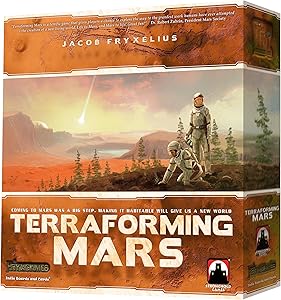
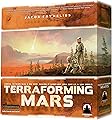
Terraforming Mars captures that engine-building satisfaction where your early card investments start generating cascading advantages by mid-game. You're a corporation competing to terraform Mars by raising temperature, ocean levels, and oxygen. It sounds niche, but the core gameplay is universal—draft cards, play them for immediate effects or ongoing bonuses, and watch your engine grow more efficient.
The card pool is enormous, which means every game plays completely differently. One session you might focus on plants and greenery, another you're all about development and resource generation. This variety keeps the best euro games 2026 list fresh even after dozens of plays. The game hits that sweet spot between "I have interesting options" and "I'm not paralyzed by analysis."
Fair warning: Terraforming Mars is longer than it looks. Plan for 90-120 minutes with experienced players, sometimes longer if someone gets stuck optimizing. The rulebook also has some ambiguous spots that require a quick FAQ check. But the gameplay itself is smooth once you get going, and the sci-fi theme actually enhances the mechanics rather than feeling tacked on.
Pros:
- Engine-building done right—your strategy evolves as you play
- Massive card variety ensures different games feel distinct
- Plays well with 1-5 players including solo mode
- Scratches that "building something" itch perfectly
Cons:
- Games run longer than you'd expect from the rulebook estimate
- Player downtime can happen between turns if someone's optimizing
- Card interactions occasionally need FAQ clarification
- If you hate take-that or player interaction, you might find this too competitive
---
3. Brass: Birmingham — Economic Tension at Its Best

Brass: Birmingham is an economic euro game where every decision carries real weight. You're industrialists in 19th-century England, building networks, connecting cities, and earning money through railroads and canals. The elegance comes from how tight the economy is—you're constantly choosing between investing in growth, connecting networks for immediate cash, or blocking opponents' expansion.
What separates Brass: Birmingham from flashier euros is the network mechanic. Connecting a city to your network generates victory points plus cash, but only when you complete the connection. This creates this beautiful push-and-pull where you're simultaneously building toward your own goals while figuring out whether to help or hinder other players' networks. The two-era structure (Canal Era then Railway Era) also creates a natural rhythm—strategies that worked in era one might be completely obsolete in era two.
The components are solid without being fancy. The board is clear and functional. What you're buying is gameplay, and it's absolutely worth the investment. Just know this: Brass: Birmingham rewards players who think long-term. If you want a game where you can feel everyone fighting over resources and opportunities, this delivers.
Pros:
- Network building creates genuine spatial puzzle elements
- The economy actually feels tight and consequential
- Two-era structure keeps the game fresh throughout
- Player interaction feels organic rather than forced
Cons:
- Learning curve is real—this one takes a few plays to click
- Games can run 60-90 minutes, longer with analysis-heavy players
- The board can feel crowded in higher player counts
- If you prefer cooperative games, this competitive pressure might not be your style
---
4. Imperium: Classics — Strategic Depth Without the Rules Bloat
Imperium: Classics offers civilization-building gameplay that won't make you spend 45 minutes learning the rulebook. You're building a Roman-era civilization, playing cards to advance through different ages, managing resources, and competing for dominance. The card-driven design means there's surprising depth in a relatively compact package.
What I appreciate most is how Imperium: Classics scales difficulty. Solo mode works brilliantly if you want competitive euro gaming against an AI that actually presents challenges. The multiplayer game shines with 2-3 players—turns move quickly, downtime is minimal, and the game finishes in 45-60 minutes. This makes it genuinely accessible for the player who wants best euro games 2026 recommendations but doesn't have two hours to spare.
The civilization angle gives the card-play flavor without requiring constant reference to theme. You're not playing generic cube-pushing; you're advancing engineering, culture, military might, and economy. It feels connected to what you're doing mechanically, which is the mark of solid design.
Pros:
- Excellent solo mode with smart AI scaling
- Rules teach in 15 minutes, play-time efficient
- Card-driven civilization building feels fresh and focused
- Great entry point for experienced players new to the Imperium line
Cons:
- Less strategic depth than Agricola or Brass if you want a long-term mental challenge
- The civilization theme is lighter than heavy euros—it's card-game flavor
- Player count matters (best at 2-3, less interesting at 4+)
- Some cards have text-heavy abilities that require frequent reference
---
5. Gaia Project — For the Hardcore Strategy Crowd

Gaia Project is Terraforming Mars' complex cousin—a spatial strategy game set in a galactic empire where you're expanding territory, managing resources, and competing for dominance on a hexagonal map. If you've played Race for the Galaxy, you know the design pedigree. This is that level of elegance applied to a larger, more intricate system.
The core appeal is spatial puzzle-solving. Where you place your infrastructure matters enormously because the map is contested and expandable territory is limited. You're also managing a tech tree, competing for research, and timing when to advance versus when to consolidate. Gaia Project rewards players who think multiple turns ahead and understand how map control creates long-term advantages.
This is absolutely a best euro games 2026 pick for the right audience—players who want to feel the weight of every decision, who enjoy spatial complexity, and who are comfortable with rulebooks that demand careful reading. It's not the game for casual play. It's the game you bring out with experienced gamers who want to spend 2+ hours working through a genuine strategic puzzle.
Pros:
- Spatial puzzle-solving done at the highest level
- Meaningful tech tree that actually influences play style
- Player powers vary enough to feel distinct across factions
- Plays best at 2 players but scales to 4
Cons:
- Steep learning curve—this is not a casual teach
- Games regularly hit 2+ hours, sometimes much longer
- The rulebook is dense and requires multiple readings
- Analysis paralysis potential with analytical players
- Your first few games might feel like you're just learning rather than strategizing
---
How I Chose These
Finding the best euro games 2026 meant looking beyond hype toward games with staying power. I weighted mechanics quality—does the system create interesting decisions every turn or just sometimes? I considered player flexibility—can this work with 2 players or 5? I also looked at whether these are games people actually return to months later versus games that get shelved after the novelty wears off.
Importantly, I included different types of euros. Worker placement, engine-building, economic simulation, civilization-building, and spatial strategy all represent different puzzle types. Your preference matters—someone who loves Agricola might find Terraforming Mars frustratingly loose, and vice versa. The goal was representing the diversity of quality euro design available right now.
I also weighted tournament results and community longevity. Games that appear regularly at board game cafes and keep getting plays at competitive events tend to have sustainable mechanics. These five have all proven themselves in real play across thousands of tables.
---
Frequently Asked Questions
What exactly is a euro game anyway?
Euro games (also called German-style board games) focus on elegant mechanics, minimal luck, player interaction through indirect means, and strategic depth. They typically emphasize puzzle-solving over theme, though recent designs integrate theme more smoothly. The best euro games 2026 list represents games where your decisions matter more than dice rolls.
Which of these best euro games 2026 options plays best solo?
Terraforming Mars and Imperium: Classics both have excellent solo modes. Terraforming Mars solo mode plays more like "beat your own score," while Imperium: Classics has an actual AI opponent. If solo play is your primary interest, Imperium: Classics is the better choice.
Are any of these games good for teaching to beginners?
Imperium: Classics and Terraforming Mars teach cleanest. Agricola requires experienced gamers. If you're introducing someone to serious strategy gaming, start with Imperium: Classics, move to Terraforming Mars, then graduate to Agricola or Brass: Birmingham.
How much table space do I need?
Brass: Birmingham and Gaia Project require the most space due to board complexity. Agricola and Imperium: Classics work fine on a standard dining table. Terraforming Mars falls somewhere in the middle. If table space is limited, Imperium: Classics is your friendliest option.
Do I need expansions to enjoy any of these?
No. Each base game is complete and excellent standalone. Expansions exist for several titles and add variety for veteran players, but they're optional enhancements rather than fixes to incomplete designs.
---
If you're serious about strategy board gaming, any of these five represent genuinely excellent investments. Agricola (Revised Edition) remains the standard-bearer for intelligent design, but Terraforming Mars, Brass: Birmingham, Imperium: Classics, and Gaia Project each offer distinct strategic puzzles that reward different skills. Your choice depends on whether you want tight economic play, engine-building satisfaction, spatial complexity, or rapid-fire decision-making. Pick based on what kind of strategic thinking excites you, and you'll get dozens of memorable game nights from any of these best euro games 2026 selections.
Get the best board game picks in your inbox
New reviews, top picks, and honest recommendations. No spam, unsubscribe anytime.
More in Strategy
The Best Engine Building Games of 2026: 5 Excellent Choices That Actually Deliver
Engine building games are genuinely addictive because they give you that satisfying progression feeling—you start with almost nothing, then gradually...
Best Euro Games for Kids in 2026: Top Picks for Family Game Night
Euro games—those elegant, strategy-focused board games from European designers—are perfect for kids who want more than dice-rolling luck.
The Best Euro Games Ever in 2026: Complete Reviews of Top Strategy Picks
If you're searching for the best euro games ever, you probably already know that euros are different from your typical American board games.