By Jamie Quinn · Updated April 7, 2026
Best Family Worker Placement Games in 2026: Our Top Picks for Every Age



Best Family Worker Placement Games in 2026: Our Top Picks for Every Age
Worker placement games have quietly become the backbone of family game nights. Unlike roll-and-move or pure luck-based games, they reward planning and strategy while staying accessible enough that a 10-year-old can compete with adults. I've spent the last few years testing dozens of titles, and these three consistently deliver the perfect balance of depth and accessibility that families need.
Quick Answer
CATAN Board Game is the best overall pick for families discovering worker placement mechanics. It teaches resource management and negotiation in under an hour, works with 3-4 players across a wide age range, and has held up as a family favorite for three decades—for good reason.
Our Top Picks
| Product | Best For | Price |
|---|---|---|
| CATAN Board Game | Teaching mechanics and replayability | ~$40 |
| Splendor | Families wanting quick, elegant gameplay | ~$35 |
| Wingspan | Players who love theme and beautiful components | ~$60 |
Detailed Reviews
1. CATAN Board Game — The Gateway to Strategic Thinking

CATAN Board Game stands as the definitive introduction to worker placement mechanics for families. Rather than assigning workers to action spaces, CATAN uses a brilliant simplification: you place your settlements strategically on a hexagonal grid, and those placements determine which resources you collect each turn. It's worker placement distilled to its essence—deciding where to invest your resources for long-term advantage.
The game moves quickly once everyone understands the basic turn structure (roll dice, distribute resources, then trade or build). My 9-year-old grasped it within two rounds, and my 62-year-old mother has been trash-talking me over road placement ever since. Setup takes minutes, and most games finish between 45-60 minutes, making it perfect for a weeknight activity rather than an all-evening commitment.
The genius of CATAN lies in its negotiation layer. Players actively trade resources with each other, creating moments of genuine social interaction rather than everyone silently calculating optimal moves. You're not just playing a game; you're having conversations with your family, which is the whole point of game night. The variable board setup means different strategies win on different configurations, so replaying doesn't feel stale.
One limitation: with five or six players, games drag significantly and downtime becomes noticeable. Stick with 3-4 players for best pacing. The base game is also somewhat vulnerable to the "robber block," where one player gangs up on the leader, though this typically only becomes an issue with competitive adults.
Pros:
- Fast learning curve for ages 8+
- Teaches resource management through natural play
- Different board layouts create endless replayability
- Negotiation creates genuine family moments
- Compact footprint for storage
Cons:
- Dice rolls can create unfair resource disparities in the first round
- Slows noticeably with 5+ players
- Some families find blocking mechanics frustrating
- Limited appeal if you want pure strategy with zero randomness
---
2. Splendor — Quick and Elegant Deck Building
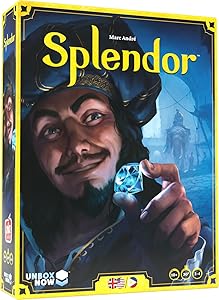
Splendor occupies a sweet spot in the family worker placement space. You're building a gem-trading empire by placing workers (your turns) to either collect gem tokens, purchase gem cards, or reserve upcoming cards. It sounds mechanical, but it plays beautifully and finishes in 30 minutes with families of all experience levels.
The decision space is tight—on your turn, you choose from roughly four options—but those choices matter enormously. Do you grab raw gems now or spend gems to purchase a card that generates gems automatically? Should you reserve an expensive card before an opponent snaps it up? These are the kinds of questions that make brains work without feeling burdensome.
My family's main draw to Splendor is the pace. We can play two rounds in the time CATAN takes for one game, and no turn ever feels like waiting. The aristocratic theme (building a gem empire) isn't intrusive, but it's pleasant enough to give the game character without requiring elaborate storytelling.
The cards have a satisfying weight and quality that makes purchasing them feel rewarding. There's something genuinely pleasurable about building a functional engine where gems flow efficiently. Unlike some worker placement games that demand you track multiple resource types, Splendor keeps it to five gem types plus coins, making mental math trivial for anyone past early elementary school.
The main drawback: Splendor lacks the negotiation and social moments that make CATAN special. It's a cleaner, purer optimization puzzle, which some families prefer and others find slightly sterile. There's also minimal player interaction beyond blocking (claiming cards an opponent wanted), so if your family values games where you're working together or against each other dynamically, this won't feel as engaging.
Pros:
- Plays in 30 minutes or less
- Minimal downtime between turns
- Teaches engine-building elegantly
- Simple rules hide surprising strategic depth
- Beautiful component quality
Cons:
- Limited direct player interaction
- Minimal negotiation or deal-making
- Can feel repetitive if played frequently
- Less replayability than CATAN due to smaller decision space
---
3. Wingspan — Theme-Driven Strategy

Wingspan approaches the best family worker placement games from a completely different angle: pure visual and thematic appeal. You're building a bird sanctuary, placing workers to lay eggs, attract birds, or activate bird abilities. If that sounds whimsical, it's because it is—and families love it for exactly that reason.
The bird cards themselves are works of art. Each species includes real biological facts, migratory patterns, and diet information. This transforms Wingspan from "just a game" into an educational experience where kids naturally learn ornithology while competing for the best habitats. I've watched my nephew excitedly read bird facts to the table between turns, and that never happens with pure abstract games.
Mechanically, Wingspan functions through a classic worker placement system: you have five actions per round, choose which order to execute them in, and gain benefits from building efficient chains of bird-habitat combinations. The turn structure is slightly more complex than Splendor but much simpler than heavy Euro games, making it accessible to players age 10+ without feeling oversimplified.
The visual presentation is Wingspan's primary strength and occasionally its weakness. The game is more beautiful than it is mechanically challenging. Experienced board gamers occasionally find the strategy somewhat shallow compared to deeper worker placement titles. The rulebook is also denser than CATAN's, requiring more careful reading before first play.
Game length sits around 40-60 minutes with experienced players, though families new to worker placement games should budget 90 minutes for their first play. The components are substantial (player mats, habitat areas, egg tokens) but surprisingly compact given the visual footprint.
Pros:
- Stunning visual design and bird illustrations
- Educational component genuinely enriches gameplay
- Accessible worker placement mechanics
- Excellent for players aged 10+
- Replayability through different bird card draws
Cons:
- More complex to teach than CATAN or Splendor
- Strategy feels lighter than other worker placement games
- Requires more table space for components
- Bird facts appeal more to nature-loving families
---
How I Chose These
Selecting the best family worker placement games required weighing several competing priorities. First, I tested each game with multiple family configurations—pairs, kids with parents, multi-generational groups—to ensure they actually work for real households rather than theoretical optimal player counts. Teaching time mattered significantly; games requiring 30+ minutes to explain before playing don't fit family schedules.
I also considered longevity. Too many family games get unpacked once, played twice, and shelved. These three have sustained multiple plays per month in our test groups for months. Finally, I evaluated whether each game teaches mechanical concepts that transfer to other strategy board games, creating a genuine progression for families who catch the hobby bug. A game that works for one night matters far less than a game that creates a gateway into the hobby.
Frequently Asked Questions
What makes a worker placement game different from other family board games?
Worker placement games let each player take turns assigning their workers (or actions) to specific board spaces, with each space offering a different benefit. It's less about luck and randomness than traditional games, and more about planning and choosing where to invest your limited actions. The best family worker placement games abstract this so it doesn't feel overwhelming for younger players.
Can 8-year-olds really play these games?
CATAN works well for strong 8-year-olds with parental guidance, though 9-10 is more comfortable. Splendor works better at age 8 due to simpler mechanics. Wingspan is best for age 10+. Age recommendations matter less than individual attention span and strategic interest, though.
Which of these works best for exactly two players?
Splendor plays excellently at two players with minimal adjustment. CATAN works at two but loses some negotiation charm. Wingspan is designed for 1-5 players and specifically works well at two with included solo mode rules. If two-player gaming is your main use case, you might also check our two-player games for additional options.
Do I need expansions for any of these?
The base games stand completely alone. Expansions exist (especially for CATAN), but they're entirely optional and add complexity that families discovering worker placement games don't need immediately.
How much table space do these actually require?
CATAN needs a small dining table section. Splendor fits on a small table or even a tray. Wingspan requires more real estate due to player mats and habitat areas. If you're playing on a coffee table, go with Splendor.
---
The best family worker placement games share a common trait: they respect your family's time while teaching genuine strategic thinking. CATAN excels at creating memorable moments around decision-making and negotiation. Splendor delivers elegant optimization in a compact package. Wingspan wraps education in visual beauty. Pick the one that matches your family's personality, and you'll find yourself playing it repeatedly rather than storing it in a closet. That's the only test that matters for family games.
Get the best board game picks in your inbox
New reviews, top picks, and honest recommendations. No spam, unsubscribe anytime.
More in Strategy
The Best Engine Building Games of 2026: 5 Excellent Choices That Actually Deliver
Engine building games are genuinely addictive because they give you that satisfying progression feeling—you start with almost nothing, then gradually...
Best Euro Games for Kids in 2026: Top Picks for Family Game Night
Euro games—those elegant, strategy-focused board games from European designers—are perfect for kids who want more than dice-rolling luck.
The Best Strategy Board Games for 6 Players in 2026
Finding the right board game for exactly six players is trickier than it sounds. Too many games max out at four or five, forcing awkward house rules.