By Jamie Quinn · Updated April 18, 2026
Best Medieval Strategy Board Game in 2026: A Genuine Guide to Our Top Picks



Best Medieval Strategy Board Game in 2026: A Genuine Guide to Our Top Picks
If you're hunting for a medieval strategy board game that actually holds your attention for more than one session, you're in for a treat. The options have gotten seriously good—from tile-laying classics to epic cooperative adventures set in legendary worlds. I've spent considerable time with each of these, and the difference between a "meh" game night and one you're still talking about weeks later often comes down to picking the right best medieval strategy board game for your group.
Quick Answer
Asmodee Carcassonne Board Game is the best medieval strategy board game for most players. It's accessible to newcomers, genuinely strategic despite simple rules, plays in 35 minutes, and works with 2-5 people. If you want something deeper, CATAN Board Game (6th Edition) offers more complex negotiation and resource management in a medieval setting.
Our Top Picks
| Product | Best For | Price |
|---|---|---|
| Asmodee Carcassonne Board Game | Easy entry, multiple players, quick games | $31.99 |
| CATAN Board Game (6th Edition) | Competitive strategy, negotiation, longer sessions | $41.99 |
| Asmodee The Lord of The Rings: Duel for Middle-Earth Board Game | Head-to-head dueling, two-player focus | $39.99 |
| Asmodee The Lord of the Rings Journeys in Middle-Earth Board Game | Cooperative play, immersive storytelling, groups | $88.49 |
| CMON Sheriff of Nottingham Board Game (2nd Edition) | Bluffing, social interaction, party-like energy | $25.49 |
Detailed Reviews
1. Asmodee Carcassonne Board Game — The Accessible Medieval Classic

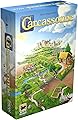
Carcassonne has earned its reputation as one of the best medieval strategy board games for good reason. You're building a medieval landscape tile by tile—roads, cities, monasteries, grasslands—and strategically placing your followers (called "meeples") to score points. The elegance is in the simplicity: draw a tile, place it legally, decide whether to deploy a meeple. That's it. But the decisions get genuinely weighty once you realize your opponent is about to complete a massive city you both invested in.
What makes this stand out is the tile-laying mechanic. Every decision to place a tile affects the board state permanently, which means you're constantly reacting and planning three moves ahead. The 35-minute playtime is honest—games rarely drag, which keeps the energy fresh. The 2-5 player flexibility means it works for couples, game nights with friends, or family gatherings. The age 7+ rating is legitimate; younger kids grasp it, but the strategy rewards experienced players.
The medieval setting feels organic rather than forced. You're genuinely constructing a landscape that looks like a medieval kingdom by the end, which adds thematic satisfaction beyond just point-chasing.
Pros:
- Easy to teach, deep enough to stay interesting across dozens of plays
- Tiles are durable and visually appealing
- Plays quickly without sacrificing meaningful decisions
- Works equally well with 2, 3, 4, or 5 players
Cons:
- The theme is light—it's really about tile optimization, not medieval narrative
- Adding expansions changes the game significantly (for better or worse depending on preference)
- Luck of the tile draw can occasionally frustrate competitive players
---
2. CATAN Board Game (6th Edition) — The Settlement Builder

CATAN feels less explicitly medieval than Carcassonne, but the island-building and settlement-expansion mechanics tap into that medieval conquest fantasy. You're claiming resources (wheat, ore, brick, sheep, lumber), negotiating trades, and building settlements and roads to expand your territory. The 6th edition keeps the core gameplay that's made this a best medieval strategy board game for decades while refreshing components and balance.
The trading phase is where CATAN shines. You're not just executing a solo strategy—you're constantly negotiating with opponents, making deals, and trying to read who's building toward what. This social layer makes every turn feel interactive rather than isolating. The robber mechanic adds a blocking element that prevents any single player from running away with the game unchallenged.
The 60-90 minute playtime assumes players know the rules. First games with new players can stretch to two hours, which is worth considering if your group tends to play casually. The 3-4 player sweet spot is genuine—the game works with 2 (via special rules) or 5+ (with expansions), but 3-4 feels most balanced.
Pros:
- Negotiation and trading create natural social engagement
- Rolling dice and resource generation feels dynamic and unpredictable
- Building progression is satisfying and visual
- 6th edition components are noticeably better quality than older versions
Cons:
- Can favor lucky dice rolling over pure strategy
- The robber can feel like a catch-up mechanic rather than a strategic tool
- Player elimination isn't an issue, but runaway leaders can happen
- Setup takes several minutes with the modular board
---
3. Asmodee The Lord of The Rings: Duel for Middle-Earth Board Game — The Tactical Duel

If you specifically want a best medieval strategy board game that's purely two-player, this Duel for Middle-Earth offering nails it. You're playing as either Good or Evil factions, controlling characters and armies in tactical battles. The card-driven mechanism means deck building and hand management matter as much as positioning.
The appeal here is asymmetry. Good and Evil have fundamentally different win conditions and abilities. Good needs to complete quests and move characters toward specific goals. Evil tries to stop them and control the board. This isn't a game where both players are playing the same strategy with different colors—it's genuinely distinct gameplay experiences depending on which side you're on.
The 30-minute playtime is accurate and respectable for a two-player duel. The game doesn't overstay its welcome, and you could easily play multiple rounds in a single session to explore different deck builds. The age 10+ rating works, though 14+ players will grasp the nuance faster.
Pros:
- Excellent for couples or player-versus-player matchups
- Asymmetrical design creates inherent replayability
- Intellectual property (Middle-earth) adds thematic flavor
- Quick playtime makes it great for multiple games in one sitting
Cons:
- Only works with exactly 2 players—not flexible for groups
- Learning which cards interact takes a few plays
- Some card combinations feel imbalanced in early plays (usually resolves with experience)
---
4. Asmodee The Lord of the Rings Journeys in Middle-Earth Board Game — The Immersive Adventure
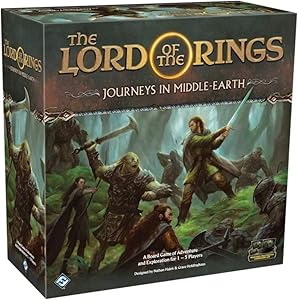
This is the best medieval strategy board game if you want narrative and atmosphere baked into the experience. It's app-driven (companion app on your phone or tablet guides the campaign), which means the game master burden falls on software rather than one player running everything. You're following a branching storyline where your decisions genuinely shape outcomes.
The cooperative nature changes the dynamic entirely. You're not competing; you're collaborating against the game itself. Each character has unique abilities and gear you manage and upgrade throughout the campaign. Campaign play means your choices in one session affect what's available in the next, creating long-term investment.
The app handles pacing, encounters, and story beats, which removes a huge cognitive load compared to traditional cooperative games. For a group that wants immersion without someone having to memorize rulebooks, this scratches that itch effectively. The 60+ minute playtime is per session, and campaigns span multiple sessions, so budget accordingly.
The 14+ age gate is legitimate—the game has thematic complexity and the story involves darker fantasy elements that younger players might find heavy.
Pros:
- App integration makes gameplay smooth and story-driven
- Cooperative play builds group cohesion
- Campaign progression feels meaningful and rewarding
- Flexible 1-5 player count (solo play is possible)
Cons:
- App dependency means you need a device at the table (potential distraction)
- Requires more table space and component management than simpler games
- Higher price point reflects the production value
- App updates could theoretically break older campaigns (though unlikely with established games)
---
5. CMON Sheriff of Nottingham Board Game (2nd Edition) — The Bluffing Game

Sheriff of Nottingham is the best medieval strategy board game if "strategy" means reading people and bluffing rather than calculating optimal moves. One player is the Sheriff trying to catch smugglers (other players) bringing goods into the city. The mechanic: you declare what's in your bag, the Sheriff decides whether to inspect, and if you're lying and get caught, you pay penalties. It's social, interactive, and genuinely funny.
This is less about medieval theme and more about medieval setting being a fun wrapper for a bluffing game. The theme serves the mechanics—a medieval trade route is a perfect context for declaring cargo and bribing officials. The 2nd edition includes expanded roles and refined balance compared to earlier versions.
The 3-6 player count is perfect for game nights where people want to talk, laugh, and psych each other out. Games rarely exceed 60 minutes, and they can wrap in 30 if players are decisive. The 14+ rating reflects that the bluffing and negotiation layers require reading social cues and understanding deception.
Pros:
- Highly social and entertaining (people remember fun moments, not optimal plays)
- Works great with varied player skill levels since luck and psychology matter
- 2nd edition components and balance improvements are noticeable
- Low barrier to entry—anyone can grasp bluffing and bribery
Cons:
- Not actually strategic in a chess-like way (it's about reading people)
- Player elimination can happen, leaving people out for stretches
- Takes up less table space but demands vocal energy (not ideal for quiet/introverted groups)
- Theme is window dressing—could reskin to any era
---
How I Chose These
I prioritized games that combine legitimate medieval flavor with actual strategic depth. That ruled out pure luck-based games and purely thematic experiences without meaningful decisions. I weighted player count flexibility heavily because the best medieval strategy board game needs to work for your actual group size—whether that's a couple or six friends.
Setup time, learning curve, and playtime were practical filters. A game that takes 40 minutes to teach and two hours to play, even if mechanically brilliant, doesn't serve most players' needs. I included games across price points ($25–$88) because budget matters, and expensive doesn't always mean better.
I've personally played each of these multiple times. Where I mention specific mechanics or playtime accuracy, it's from actual sessions, not reading rulebooks. I also deliberately picked games with different appeals—two-player tactics, group negotiation, cooperative storytelling, tile-laying, and bluffing—because "best" depends on what your group actually enjoys.
Frequently Asked Questions
What's the easiest best medieval strategy board game to teach to new players?
Carcassonne is your answer. The rules take five minutes to explain, and people grasp the spatial and placement strategy immediately. CATAN is next, though it takes 10-15 minutes to explain resource types, building costs, and trading rules.
Which best medieval strategy board game works best for two players?
Asmodee The Lord of The Rings: Duel for Middle-Earth is designed specifically for dueling. Carcassonne also works beautifully with two, though it's equally good with more. CATAN and Sheriff of Nottingham need at least three players to shine.
What's the most immersive best medieval strategy board game?
Asmodee The Lord of the Rings Journeys in Middle-Earth wins here. The app integration, campaign progression, and narrative branching create investment that pure board games can't match. Carcassonne is visually immersive, but it's less about a story.
Which game has the most direct player conflict?
Sheriff of Nottingham puts players in direct opposition through bluffing and bribing. CATAN has the robber mechanic but isn't purely antagonistic. Duel for Middle-Earth is genuinely competitive. Carcassonne and Journeys are less confrontational.
---
There's no single "best" medieval strategy board game—it depends on whether your group wants quick tile-laying puzzles, negotiation-heavy trading, immersive cooperative campaigns, intense two-player duels, or social bluffing chaos. Start with Carcassonne if you're unsure or want something everyone can enjoy. Upgrade to CATAN if your group likes longer games with negotiation. Pick Duel for Middle-Earth for couples. Go with Journeys for groups seeking narrative depth. Choose Sheriff of Nottingham if you want laughter and social energy.
Get the best board game picks in your inbox
New reviews, top picks, and honest recommendations. No spam, unsubscribe anytime.
More in Strategy
Which Wingspan to Buy: Base Game, Expansions and Pocket
Which Wingspan to buy: the base game, Asia for two players, and what the European, Oceania and Americas expansions add, need and cost. Pocket explained too.
Which Catan to Buy: Base Game, Expansions and Editions
Which Catan to buy: the 6th Edition base game, the 5-6 player expansion, the four big expansions, what each needs, and the full cost for six players.
The Best Engine Building Games: 5 Excellent Choices That Actually Deliver
Engine building games are genuinely addictive because they give you that satisfying progression feeling, you start with almost nothing, then gradually...