By Jamie Quinn · Updated April 18, 2026
Best Simple Strategy Board Games in 2026: Our Top Picks for Casual & Serious Players
Best Simple Strategy Board Games in 2026: Our Top Picks for Casual & Serious Players
You don't need complex rulebooks or three-hour game nights to enjoy real strategic depth. Some of the most satisfying board games force you to make meaningful decisions in under an hour with mechanics you can teach in five minutes. Whether you're hosting a casual game night or looking to get into hobby board gaming, the best simple strategy board games hit that sweet spot between accessible and genuinely challenging.
Quick Answer
Azul Board Game is our top pick for the best simple strategy board game overall. It's a tile-placement game that teaches in minutes but rewards careful planning and tile management. The elegant rules and stunning visual design make it perfect for beginners and experienced players alike, and at $34.39, it's reasonably priced for how much play value you'll get.
Our Top Picks
| Product | Best For | Price |
|---|---|---|
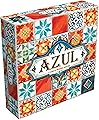
| Azul Board Game | All-around best; beautiful design; teaches in 5 minutes | $34.39 |
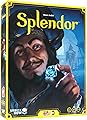
| Asmodee Splendor Board Game | Engine building and economic strategy | $29.20 |
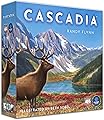
| AEG & Flatout Games Cascadia | Relaxing puzzle-style strategy; nature lovers | $31.99 |
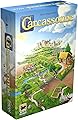
| Asmodee Carcassonne Board Game | Flexible player counts; medieval theme | $31.99 |
| Niche Nation Games Overlap | Budget option; pure tactical depth; 2-8 players | $12.95 |
Detailed Reviews
1. Azul Board Game — Award-Winning Tile-Placement Strategy Game, Beautiful Mosaic Art, Family Fun for Kids & Adults, Ages 8+, 2-4 Players, 30-45 Minute Playtime
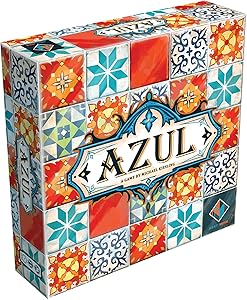
Azul is exactly what happens when a game designer strips away everything unnecessary and leaves only pure strategy. You're collecting colored tiles to complete rows on your player board, but here's the catch: when you pick tiles, you're also forcing opponents to take tiles they might not want. This push-your-luck mechanic creates genuine tension without any randomness from dice or cards.
The rules fit on one page. On your turn, you select all tiles of one color from the central display and place them in one of your pattern rows. Any tiles left behind go to the center for next player. That's it. But the strategy spirals outward immediately—do you take the tiles that help you, or do you block an opponent from completing their board? The 30-45 minute playtime means games move quickly, and the beautiful production with ceramic-quality tiles makes setup satisfying.
This is one of the best simple strategy board games because it proves you don't need complexity to create tough decisions. Every turn feels consequential. The scoring system rewards completing rows but also punishes having leftover tiles, so you're constantly balancing ambition against caution.
Pros:
- Gorgeous components that feel premium
- Rules teach in literally five minutes
- Every decision matters; very little downtime between turns
- Great for 2-4 players with similar experience levels
Cons:
- Less replayability than some other titles (once you know the optimal patterns, strategy becomes more scripted)
- Tile color distribution can occasionally create uneven games
- Doesn't work as well with wildly different skill levels
---
2. Asmodee Splendor Board Game — Master The Art of Wealth and Prestige! - Engaging Gem Mining Strategy Game for Kids & Adults, Ages 10+, 2-4 Players, 30 Min Playtime
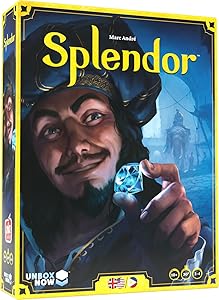
Splendor teaches you what engine building means. You're a gem merchant collecting colored gems (represented by poker chips) to purchase gem cards, which then give you permanent discounts on future purchases. As your collection of cards grows, your purchasing power expands exponentially—that's the engine firing.
The core loop is straightforward: take up to three gems, or buy a card using the gems you've collected, or reserve a card for later. But the strategy deepens once you realize you're competing for the same cards as your opponents. Do you grab the cheap card now and accelerate your engine, or invest in an expensive card that's worth more points? If you reserve a card, you block opponents from taking it but have to pay a premium when you finally buy it.
Splendor is one of the best simple strategy board games for people who like building toward something rather than direct conflict. Games run 30 minutes, and the gem chips feel great to handle, which makes every transaction satisfying. The economy self-balances—if one player is clearly pulling ahead, their remaining cards become less appealing, and other players can catch up.
Pros:
- Teaches engine building without overwhelming new players
- Excellent components (the gem tokens are weighty and tactile)
- Plays quickly with clear turn structure
- Scales well with player counts (2-4)
Cons:
- Can feel repetitive after many plays since card pools are fixed
- Leaders can run away with games if they hit their engine early
- Less interactive than direct-conflict games—you're largely focused on your own board
---
3. AEG & Flatout Games Cascadia — Award-Winning Board Game Set in the Pacific Northwest | Easy to Learn | Quick to Play | Ages 10+
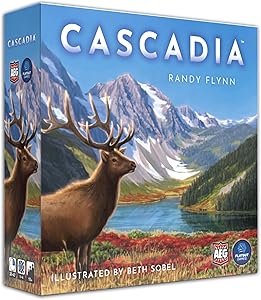
Cascadia is a tile-laying puzzle game about building Pacific Northwest ecosystems. You're placing hexagonal tiles depicting forests, rivers, mountains, and coast to create landscapes that score points when animals (salmon, elk, bears, owls) connect to their preferred habitats. There's no conflict, no blocking, no negotiation—just you against an elegant optimization puzzle.
This sounds laid-back, and it is, but don't mistake calm for shallow. Tile draws are semi-random (you draw three, pick one, and the others go to other players), so you're managing what you get rather than suffering from bad luck. The scoring is delightful: you score based on connected regions and whether animals sit in tiles matching their habitat preference. A seemingly perfect placement can suddenly become suboptimal when you realize a tile you needed is already committed elsewhere.
Cascadia represents a whole category of best simple strategy board games that prioritize puzzle satisfaction over competition. Games take 20-30 minutes, and there's almost no downtime because everyone's working simultaneously. If your game group gets tense during cutthroat games, Cascadia offers a respite without sacrificing decision-making.
Pros:
- Cooperative yet individual—everyone plays at their own pace
- Beautiful nature-themed art and components
- Zero randomness complaints because bad tiles aren't "luck"
- Quick playtime makes it easy to run multiple games
Cons:
- Not for people who love direct competition or negotiation
- Optimal play can turn into analytical paralysis
- Less replayability once you internalize optimal patterns
---
4. Asmodee Carcassonne Board Game — Classic Tile-Laying Strategy Game, Family Fun Medieval Adventure for Kids & Adults, Ages 7+, 2-5 Players, 35 Minute Playtime

Carcassonne is the elder statesman of simple strategy board games. You're drawing tiles depicting roads, cities, and monasteries and placing them to extend other players' features—or block them. You score by placing little wooden followers on tiles and completing the features they're on. The medieval setting and wood components give it timeless charm, and the rules are genuinely simple enough for children.
What makes Carcassonne special is how it scales. With two players, it's a tense duel where you're constantly undermining each other's plans. With five players, it becomes more chaotic and social. The game is flexible about what you're doing on any given turn: you can focus on building your own features, or you can dedicate yourself to blocking whoever's winning. This flexibility is why Carcassonne has remained popular for two decades.
The best simple strategy board games balance simplicity with player count flexibility, and Carcassonne nails this. A 35-minute game with 2-5 players means it works for almost any gathering. The tile-drawing randomness keeps experienced players from completely dominating newcomers.
Pros:
- Works great with 2-5 players (rare flexibility)
- Easy enough to teach to kids, deep enough for adults
- Wooden followers and tile quality feel premium
- Plays in 35 minutes regardless of player count
Cons:
- Luck-dependent (bad tile draws can doom a player's strategy)
- Can feel meanspirited if the table is focused on blocking rather than building
- Expansions are numerous, which can be overwhelming for beginners
---
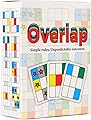
5. Niche Nation Games Overlap — Award-Winning Deceptively Simple Strategy Card Game for Adults and Families - 2 Player Game or Up to 8 Players - Easy to Learn Mensa Recommended Brain Game

Overlap is proof that you can build enormous strategic depth into a card game with a four-sentence ruleset and zero randomness. You're building overlapping chains of cards where each card has two attributes (like color and number). You score points by controlling the longest chain of each attribute. That's the entire game, and yet it rewards pattern recognition, spatial reasoning, and forward planning at a level that rival much heavier games.
At $12.95, Overlap is the most affordable game on this list and arguably offers the highest strategic ceiling. The Mensa recommendation isn't marketing fluff—this game is genuinely cerebral. Plays scale from 2 to 8 people, though it shines with 2-4. Games finish in 15-25 minutes, so you can play multiple rounds and adapt your strategy.
Overlap belongs in the best simple strategy board games category because it proves elegance. There are no card symbols to decode, no special abilities, no exceptions. Every card works the same way. Your brain is entirely focused on spatial strategy and predicting opponents' moves. It's refreshing.
Pros:
- Extremely affordable
- Zero luck; every loss is entirely your fault (or you just faced a better player)
- Scales to 8 players without rule modifications
- Mensa-approved with genuine depth for serious players
Cons:
- Can feel abstract and dry if you prefer thematic games
- Minimal physical components (just cards—no tokens or boards to manipulate)
- Analysis paralysis is real; quarterbacking in groups is tempting
- Lacks the social fun of games with more traditional structures
---
How I Chose These
I evaluated each game against five criteria specific to simple strategy games. First, rule complexity: games must teach in under 10 minutes with no reference to rulebooks mid-game. Second, decision quality: even simple games must create genuine strategic tension where your choices matter. Third, player count flexibility: the best simple strategy board games work across different player counts without major rule changes. Fourth, production value: since these games rely on mechanics rather than theme, quality components matter more. Fifth, replayability: does the strategy shift enough to justify multiple plays, or do optimal patterns emerge too quickly?
I also weighed what these games are not good for. Simple strategy games aren't suitable for players who want narrative experiences or heavy randomness. They're not ideal for groups where skill gaps are enormous—a new player will lose to an experienced player more often in strategic games than in luck-based ones. I kept these limitations in mind when recommending each title.
---
Frequently Asked Questions
What's the difference between simple strategy board games and complex ones?
Simple strategy games teach in under 10 minutes and use mechanics you understand completely by turn two. Complex strategy games have hidden information, multiple subsystems, or rulebooks longer than 20 pages. Both are enjoyable, but simple games are better for introducing new players or playing multiple rounds in one sitting.
Can I play these games with complete beginners?
Absolutely. Azul, Cascadia, and Carcassonne are specifically designed to teach quickly. Splendor and Overlap require slightly more strategic thinking, but both remain accessible. The advantage of best simple strategy board games is that experienced players don't need to "dumb down" their play—the strategies are genuinely different at different skill levels.
Which game is best for two players?
Azul and Overlap both excel with two players and create head-to-head tension. Carcassonne works with two but shines with more. Cascadia is less interactive, so it doesn't benefit from the 2-player dynamic. Splendor plays fine with two but becomes a slightly different game.
Do any of these have hidden information or luck?
Carcassonne has tile-draw randomness (you don't know what tile you'll get). Cascadia has semi-random tile selection. Splendor has card-draw randomness from the deck. Azul and Overlap have zero randomness—your success or failure depends entirely on decision-making. If you want pure skill, pick Azul or Overlap.
How long do games actually take?
All of these clock in under 45 minutes: Azul (30-45), Splendor (30), Cascadia (20-30), Carcassonne (35), and Overlap (15-25). Multiple games in a single session is realistic with all of them.
The best simple strategy board games don't require a time commitment or a PhD in game design. They're an entry point to hobby gaming that happens to be genuinely fun even for experienced players. Start with Azul if you want the most widely appealing option, or pick Overlap if you want maximum strategic depth at the lowest price.
Get the best board game picks in your inbox
New reviews, top picks, and honest recommendations. No spam, unsubscribe anytime.
More in Strategy
Which Wingspan to Buy: Base Game, Expansions and Pocket
Which Wingspan to buy: the base game, Asia for two players, and what the European, Oceania and Americas expansions add, need and cost. Pocket explained too.
Which Catan to Buy: Base Game, Expansions and Editions
Which Catan to buy: the 6th Edition base game, the 5-6 player expansion, the four big expansions, what each needs, and the full cost for six players.
The Best Engine Building Games: 5 Excellent Choices That Actually Deliver
Engine building games are genuinely addictive because they give you that satisfying progression feeling, you start with almost nothing, then gradually...