By Jamie Quinn · Updated April 18, 2026
Best Strategy Board Game for Teens in 2026



Best Strategy Board Game for Teens in 2026
Finding a strategy board game that actually holds a teenager's attention is harder than it sounds. Most games either feel too childish or require a PhD in game theory to understand. The ones that hit the sweet spot—challenging enough to be interesting, simple enough to learn in 10 minutes, and genuinely fun to play—are worth their weight in gold.
Quick Answer
CATAN Board Game (6th Edition) is the best strategy board game for teens because it teaches real decision-making under uncertainty, plays in under 90 minutes, and stays engaging across dozens of replays. Teenagers love it because they're actually negotiating and strategizing, not just moving pieces around a board.
Our Top Picks
| Product | Best For | Price |
|---|---|---|
| CATAN Board Game (6th Edition) | Teens who want deep strategy and negotiation | $41.99 |
| Azul Board Game | Quick, elegant strategy with beautiful design | $34.39 |
| Forbidden Island | Learning cooperative strategy as a group | $20.99 |
| The Chameleon | Social strategy and bluffing with friends | $24.99 |
| Bameca Magnetic Chess Game | Classic strategy and portable play | $13.49 |
Detailed Reviews
1. CATAN Board Game (6th Edition) — The Gold Standard for Teen Strategy

If you're looking for the best strategy board game for teens, CATAN is the starting point. It's been around for decades, and there's a reason thousands of game nights happen with it every week. The core mechanic is brilliant: you build settlements and roads on an island, gather resources by rolling dice, and trade with other players. Sounds simple, but what makes it genuinely strategic is that nothing is guaranteed. Your carefully planned expansion might crumble if someone blocks your resources, forcing you to adapt and negotiate.
The 6th edition is the current version, and it's polished. The board pieces are quality, the resource cards are clear, and the rules are straightforward enough that teens can teach the game to their parents (always a good sign). Games run 60-90 minutes, which is long enough to feel meaningful but short enough that attention spans don't suffer. It plays 3-4 players (you can expand with separate expansions), so it works great for friend groups.
The strategy isn't about memorizing rules—it's about reading the table. Who's winning? Should you block them or focus on your own expansion? When should you trade? These are decisions teenagers actually care about making, and CATAN forces them to think several moves ahead while staying flexible. It's also genuinely fun to lose because the outcome never feels predetermined.
Pros:
- Deep negotiation mechanics that reward social awareness
- Endless replayability because the board changes every game
- Quick enough to play multiple rounds in an evening
- Teaches risk assessment and resource management naturally
Cons:
- Luck plays a role (dice rolls), so skilled players can lose to chance
- One bad trade decision can feel frustrating
- Requires 3-4 players (awkward for pairs unless you buy expansions)
---
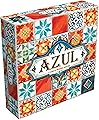
2. Azul Board Game — Award-Winning Tile-Placement Strategy Game, Beautiful Mosaic Art, Family Fun for Kids & Adults, Ages 8+, 2-4 Players, 30-45 Minute Playtime
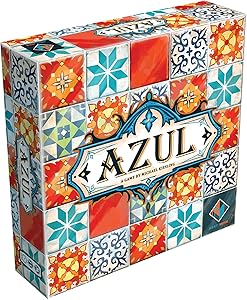
Azul is what happens when a designer strips strategy down to its purest form. You're collecting and placing colored tiles to build a mosaic. On the surface, that's it. But the mind games underneath are serious.
The brilliant part is the shared pool system. On your turn, you pick a color from the center, but when you do, all the other colors scatter to other players. This means every move is a mini-negotiation: you help yourself while sometimes accidentally helping your opponent. Teenagers immediately grasp why their move matters beyond just their own score, and that's where the strategic depth comes from.
It's arguably the most beautiful best strategy board game for teens on this list. The components are genuinely nice—real ceramic tiles, elegant design. That matters because teenagers are more likely to want to play something that looks good on the table. Games run 30-45 minutes, so you can fit multiple rounds into a hangout. It plays 2-4 players, making it perfect for friend pairs or larger groups.
The learning curve is nearly non-existent. You can explain the rules in two minutes, and everyone immediately understands why they matter. There's no hidden information or complex combos to memorize. Every game plays differently based on tile availability and player timing, but the strategy stays focused.
Pros:
- Genuinely gorgeous board and components
- Fast playtime with zero downtime between turns
- Works brilliantly with 2 or 4 players
- Teaches pattern recognition and blocking mechanics
Cons:
- Shorter game time might feel less "epic" for some teens
- Less negotiation than games like CATAN
- Strategic depth is real but less forgiving of mistakes
---
3. Gamewright - Forbidden Island — Cooperative Strategy Survival Board Game, 2-4 Players

Forbidden Island flips the script. Instead of competing against each other, your teen group works together to escape a sinking island. This is the best strategy board game for teens who want to cooperate rather than clash—think friend groups that would rather not feel any tension during game night.
The setup is brilliant: the board tiles sink randomly, creating genuine urgency. You're moving around collecting treasures while the island literally drowns under your feet. The tension is real but manageable. Unlike purely competitive games, you can actually talk strategy openly—there's no advantage to hiding your plan.
It plays 2-4 people, and the game scales beautifully. With 2 players, it's tighter. With 4, it's more chaotic (in a good way). Games run about 30 minutes, so it's perfect for a quick co-op experience without marathon-length commitment. The rules are intuitive, and there's no complex economy or resource management to learn.
The catch? It's not as strategically deep as CATAN or even Azul. You're largely executing a plan together rather than making individual decisions that feel weighty. For some teens, that's exactly what they want. For others who crave more personal agency, it might feel a bit lightweight.
Pros:
- Perfect introduction to cooperative gaming
- Creates genuine tension without player conflict
- Quick playtime makes it replayable
- Easy to teach and learn
Cons:
- Can suffer from "quarterbacking" (one player directing everyone)
- Lighter on individual strategy compared to competitive games
- Luck plays a significant role in difficulty
---
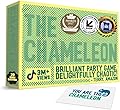
4. The Chameleon: Award-Winning Bluffing Board Game for Family, Adults & Friends | Includes 80 Extra Secret Words | Who is The Imposter?
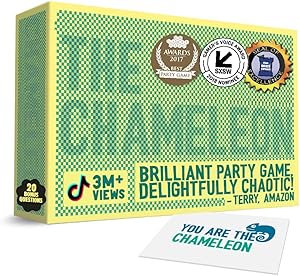
The Chameleon is a best strategy board game for teens that's really a social deduction game in disguise. Everyone knows a secret word except one person (the chameleon). On each round, you give one-word clues to help people guess the word—but not too helpful, because you don't want to help the chameleon figure it out.
The strategy here is purely social. How obvious can you be without tipping off the imposter? How can you hint at the word in ways that wouldn't make sense to someone outside the group? Teenagers are naturally good at this kind of language play and reading the room, so they immediately get invested.
There's minimal setup, no board to manage, and no long rulebook. You play rounds quickly, and each round is tight—maybe 10 minutes total. The 80 extra secret words included means you're not repeating games for a long time. It plays 2-8 people, making it genuinely flexible for different friend group sizes.
The downside is that this isn't really a "strategy" game in the traditional sense. There's no planning, resource management, or long-term positioning. It's pure social play and bluffing. If your teen group wants something with mechanical depth, this isn't it. But if they want something that creates moments of laughter and clever moments, it's excellent.
Pros:
- Creates hilarious "aha" moments when the chameleon is revealed
- Works with large groups (up to 8 players)
- Minimal setup and teaching time
- Replayable hundreds of times with included word expansions
Cons:
- Doesn't offer mechanical strategy in the traditional sense
- Relies heavily on group dynamics and social awareness
- Quality matters less since it's primarily word-based
---
5. Bameca Magnetic Chess Game with Full-Size Stones, Magnet Game with String, for Family & Party & Travel & Camping, Puzzle Strategy Games, 2 Player Games for Kids & Adults

Chess is the original strategy game, and this magnetic set is the practical version. Unlike fancy wooden sets, the Bameca game is portable, durable, and the magnets keep pieces from sliding around during travel. If your teen is interested in developing serious strategic thinking, chess is still the gold standard.
The advantage of this specific set is that it's accessible. It's not intimidating like a $200 tournament set, and it's portable enough to play anywhere. The full-size pieces are actually usable (some travel chess sets feel cramped), and the magnetic base holds pieces securely. The included string bag makes storage and transport genuinely convenient.
Chess is less of a game and more of a strategic tool. Learning it teaches planning, pattern recognition, and the ability to think several moves ahead. For teens genuinely interested in strategy games, chess provides unlimited depth. You can spend years improving at it.
The catch? Chess has a massive learning curve if your teen is starting from scratch. The opening theory alone is overwhelming. And unlike the other games here, chess doesn't involve luck or negotiation—it's pure skill, which means losses can feel discouraging if someone significantly outmatches your teen. Also, this is a two-player only game, so it won't work for friend groups.
Pros:
- Portable and durable for travel
- Unlimited strategic depth for serious learners
- Low cost for a quality set
- Develops genuine analytical thinking
Cons:
- Steep learning curve and intimidating opening theory
- Only 2 players (no group play)
- Can feel frustrating when outmatched by experienced players
- Games can run very long for beginners
---
How I Chose These
Picking the best strategy board game for teens required weighing what actually matters to that age group. I focused on games with clear strategic choices where decisions feel consequential—not games where luck overshadows thinking, and not games so complex that teaching them feels like a college course.
I prioritized games where the strategy doesn't require memorization. Teenagers learn through play, not rulebooks, so games where you figure things out as you go matter more than games where you need to study optimal builds beforehand. I also weighted replayability heavily because the best game is one they'll actually pull off the shelf multiple times.
Player count flexibility was important too. Most teens play in groups, but some pairs want to play together, so I included options for different group sizes. Finally, I looked at production quality because teenagers notice when games look nice or feel cheap. A beautiful board genuinely affects whether something gets played regularly or sits on a shelf.
Frequently Asked Questions
What makes something a "strategy" game versus just a regular board game?
A real strategy game is about meaningful choices where your decisions directly affect the outcome. You're not just rolling dice and moving pieces. You're making decisions about resource allocation, timing, and positioning where you can clearly see how your choice mattered. The best strategy board game for teens is one where losing feels like a consequence of your decisions, not bad luck.
Can teens really play CATAN if they haven't played board games before?
Absolutely. CATAN is actually the perfect entry point. It looks more intimidating than it is because of the board setup, but the actual rules are simpler than most video games teens already play. The learning happens naturally during the first game, and by round two, everyone understands the strategy.
How much does luck matter in these games?
It varies. CATAN has dice, so luck plays a role—but not a dominant one. Skilled players win most games. Azul has zero luck; pure skill determines the winner. Forbidden Island uses luck as part of the design (the sinking island is random). Chess has no luck whatsoever. For most teens, some luck is actually good because it keeps games from feeling predetermined.
Are these games better than digital strategy games?
Different strengths. Digital games offer complexity that would be unplayable on a physical board. But board games offer something digital can't: social presence. You're reading real people, negotiating face-to-face, and creating shared memories. For teenagers, the social aspect often matters more than pure mechanical depth.
Which game should we start with if we're new to strategy games?
Start with Azul or Forbidden Island. Both teach strategy without overwhelming complexity. Once your group understands how strategy games work, move up to CATAN. Save chess and The Chameleon for specific situations—chess if someone wants serious depth, The Chameleon if you want maximum social play.
---
The best strategy board game for teens is ultimately the one your group will actually play together. CATAN probably edges everything else because it teaches real decision-making in a format that's both accessible and genuinely fun, but Azul is perfect if you want something faster, and Forbidden Island works brilliantly if your group prefers cooperation over competition. Start there, and you'll build a foundation for understanding what your teens actually enjoy about strategy games.
Get the best board game picks in your inbox
New reviews, top picks, and honest recommendations. No spam, unsubscribe anytime.
More in Strategy
The Best Engine Building Games of 2026: 5 Excellent Choices That Actually Deliver
Engine building games are genuinely addictive because they give you that satisfying progression feeling—you start with almost nothing, then gradually...
Best Euro Games for Kids in 2026: Top Picks for Family Game Night
Euro games—those elegant, strategy-focused board games from European designers—are perfect for kids who want more than dice-rolling luck.
The Best Euro Games Ever in 2026: Complete Reviews of Top Strategy Picks
If you're searching for the best euro games ever, you probably already know that euros are different from your typical American board games.