By Jamie Quinn · Updated May 4, 2026
Best Strategy Board Games for Couples in 2026





Best Strategy Board Games for Couples in 2026
Playing strategy board games with your partner isn't just about winning—it's about spending quality time together, making decisions as a team, and discovering how you both think under pressure. The best strategy board games for couples blend competitive tension with genuine fun, whether you want to outsmart each other or work toward a shared goal.
Quick Answer
7 Wonders Duel is our top pick for the best strategy board games for couples because it delivers fast-paced, tactical gameplay in 30 minutes with zero downtime. Both players are always engaged, the decision space is deep enough to reward planning, and it plays exclusively for two—something rare in strategy games.
Our Top Picks
| Product | Best For | Price |
|---|---|---|
| 7 Wonders Duel | Pure two-player strategy with constant engagement | Check Amazon |
| Sky Team | Cooperative strategy where couples work together | $32.29 |
| Azul Board Game | Quick, beautiful tile-placement for casual nights | $34.39 |
| Splendor Board Game | Gateway strategy with economic depth | $28.98 |
| Terraforming Mars | Deep engine-building for ambitious couples | Check Amazon |
| Brass: Birmingham | Meaty economic strategy for experienced players | Check Amazon |
| Imperium: Classics | Card-driven civilization building for two | Check Amazon |
| Undaunted: Normandy | Tactical deck-building with asymmetric gameplay | Check Amazon |
| The Couples Game That's Actually Fun | Relationship-focused conversation starter | $15.99 |
| The 5 Love Languages Card Game | Meaningful conversations paired with strategy | $19.82 |
Detailed Reviews
1. 7 Wonders Duel — The Gold Standard for Two-Player Strategy

7 Wonders Duel stands apart because it's specifically designed for exactly two players, which matters enormously. Most strategy games accommodate 2-4 players as an afterthought, but this one was built from the ground up for couples. You're drafting cards from pyramids, developing your civilization, and managing military, science, and civilian scoring tracks simultaneously. The genius is that you can never see what your opponent is planning until it's too late, and that creates this wonderful tension where you're constantly adjusting your strategy mid-game.
Gameplay runs 30-45 minutes once you know the rules, and there's almost no downtime—while one person plays, the other is already thinking three moves ahead. The card interactions reward planning without punishing spontaneity, so newer players don't feel completely lost against experienced ones. What really works for couples is that both players stay mentally engaged the entire game; there's no "waiting for your turn" frustration.
Pros:
- Designed exclusively for two players with asymmetric advantages that shift
- Quick playtime means you can easily fit multiple games into an evening
- Learning curve is moderate, but depth increases dramatically after a few plays
- Beautiful production quality that looks great on a coffee table
Cons:
- Initial ruleset can feel slightly confusing on your first read-through
- Limited player count (only two) means it's not flexible for group game nights
- Some players find the random card distribution can occasionally feel unfair despite clever mechanics
---
2. Scorpion Masqué Sky Team — Cooperative Strategy Where You Work Together

If you'd rather win together than compete, Sky Team flips the script entirely. You and your partner are pilots trying to land a plane despite mounting complications. The catch: you can see your partner's hand but not your own, so communication is everything. You're playing cards numbered 1-15, and you need to manage a shared deck where higher cards help but also advance a threat meter. It's beautiful tension—do you play high to win this round, or save it because you're worried about the approaching storm?
The game takes 20 minutes and plays in near silence, with couples communicating through glances and careful card placement. For couples who want strategy without the adversarial edge, this is revelation. Winning demands you understand how your partner thinks and can predict their moves. It's genuinely romantic in a way most games aren't.
Pros:
- Perfect for couples wanting collaborative gameplay over competition
- Blazing fast at 20 minutes, making it ideal for weeknight gaming
- Won multiple 2024 awards—this isn't a niche pick, it's genuinely excellent
- Rules fit on a single page after initial tutorial
Cons:
- Very limited replayability if you solve the puzzle efficiently (20-30 plays is typical)
- Requires genuine communication, which can expose relationship friction if you're not on the same page
- Cooperative games mean one player's mistake means you both lose
---
3. Azul Board Game — Award-Winning Tile-Placement Strategy Game, Beautiful Mosaic Art, Family Fun for Kids & Adults, Ages 8+, 2-4 Players, 30-45 Minute Playtime
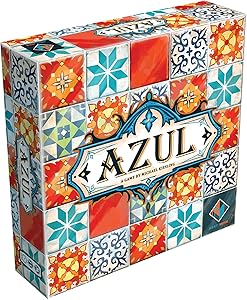
Azul is the board game equivalent of a perfectly balanced cocktail. It looks stunning—your tiles form an actual mosaic as the game progresses—but the strategy underneath is genuinely interesting. You're drafting colored tiles from a central pool, trying to create matching sets on your board while simultaneously forcing your opponent to take tiles they don't want. It sounds simple because it basically is, but there's real tactical depth in tile denial and spatial planning.
For couples, Azul hits a sweet spot: it's easy enough that non-gamers feel competitive within a play or two, but experienced players can spot five-move combinations that shift the entire game state. A round takes 30-45 minutes, and because you're actively choosing tiles on the table (not drawing hidden cards), both players can see exactly what's at stake. There's no luck masking bad decisions—if you lose, you can absolutely see why.
Pros:
- Visually beautiful enough to display permanently on a shelf
- Rules are learnable in five minutes, mastery takes much longer
- Feels competitive without requiring hours of commitment
- Works great as a "first strategy game" for couples new to the hobby
Cons:
- Tile distribution can occasionally create runaway leaders mid-game
- Less replayability than deeper strategy games once you master positioning
- Doesn't offer the narrative satisfaction that story-driven games provide
---
4. Asmodee Splendor Board Game — Master The Art of Wealth and Prestige! - Engaging Gem Mining Strategy Game for Kids & Adults, Ages 10+, 2-4 Players, 30 Min Playtime
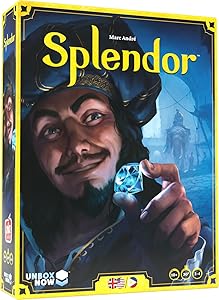
Splendor is the gateway strategy game that actually deserves the hype. You're collecting colored gems, purchasing developments that give permanent bonuses, and racing to reach 15 prestige points. The elegance is in how simple each individual turn is—take gems, buy a card, or reserve a card for later—but how those early decisions compound into completely different game states by midgame. You might realize at turn 15 that you committed to a blue gem strategy too early and now you're locked out of competing for the most valuable cards.
For couples specifically, Splendor creates these natural moments where you're watching your partner's strategy develop and either responding defensively or doubling down on your own approach. Do you buy the card they clearly need, or focus on your own engine? Games run 30 minutes, and the back-and-forth rarely feels random. Someone wins because they made better decisions, which means you both learn how to improve next time.
Pros:
- Straightforward rules hide surprisingly deep strategic options
- Each game plays differently depending on which cards are available
- Perfect difficulty gradient—casual players stay competitive, experienced players can optimize
- Components feel premium without being extravagant
Cons:
- Can feel repetitive after 50+ plays since the core loop doesn't dramatically shift
- First-player advantage is subtle but real in shorter games
- Lacks the "epic narrative" feeling of more complex strategy games
---
5. Terraforming Mars

Terraforming Mars is for couples who want to sink their teeth into something meaty. You're managing a corporation colonizing Mars, playing cards that represent technologies and building projects, and racing to terraform the planet while generating income and prestige. A single game can run 90-120 minutes (faster once you know what you're doing), and the decision space is genuinely vast. On your turn, you might play a card, use an action, raise your production—every action has ripple effects.
The beauty for couples is that both players are pursuing similar victory paths but with completely different card combinations, so your strategies diverge wildly. You might build an economy around energy production while your partner focuses on massive projects. The game rewards planning but punishes inflexibility, and there's enough randomness in card draws that luck doesn't dominate—skill does.
Pros:
- Enormous strategic depth that rewards learning and refinement
- Each game feels distinct based on card availability
- Solo mode means you can practice against yourself before facing your partner
- Production quality is exceptional with clear iconography
Cons:
- 90+ minute playtime is substantial for a casual weeknight
- Learning curve is steep; expect 2-3 games before you stop making obvious mistakes
- Analysis paralysis is real for optimizers—some turns can feel long
---
6. Brass: Birmingham

Brass: Birmingham is a heavy economic strategy game where you're building industries during the Industrial Revolution, managing networks, and constantly calculating how your actions affect future turns. It's genuinely meaty—probably the most serious game on this list. You're placing industries on a map, connecting them via railways and canals, and scoring based on network efficiency. What makes it special is that the game has two eras, and industries you built in era one become liabilities in era two if you didn't plan correctly.
For experienced couples who've played other strategy board games and want something that truly challenges both players, Brass: Birmingham delivers. It's a game where one wrong turn can derail your entire economic strategy, which means you both stay deeply engaged trying to outthink each other three moves ahead.
Pros:
- Strategic depth that survives 100+ plays without feeling solved
- Two-era structure creates natural narrative arc
- Elegant rules system that handles complex interactions cleanly
- Genuinely teaches you how your partner thinks economically
Cons:
- 60-90 minute playtime with high mental overhead
- Rules teach is moderately difficult; reading a guide online is worthwhile
- Not forgiving to new players—early mistakes compound badly
- Very competitive; some couples find it too cutthroat for regular play
---
7. Imperium: Classics

Imperium: Classics is a deck-building game where you're leading a civilization from ancient times through various ages, playing cards that represent citizens, soldiers, and resources. The genius is that your deck constantly evolves—older cards become obsolete as you progress, so you're naturally removing weak cards and building toward powerful engines. Each player has a unique civilization with different starting abilities, creating asymmetric gameplay that keeps rematches feeling fresh.
Games run 45-60 minutes, and the pacing is excellent—there's always something interesting to do without the analysis paralysis of heavier games. For couples, the deck-building creates this satisfying progression where early randomness (your shuffle matters more when you have fewer cards) gradually gives way to skill as your decks become more refined.
Pros:
- Elegant deck-building system that evolves naturally through the ages
- Two-player specific design means perfect balance
- Asymmetric civilizations encourage multiple replays to try different factions
- Pacing is excellent with minimal downtime
Cons:
- Learning the card abilities takes a game or two
- Some players find the theme (civilization building) slightly abstracted from the mechanics
- Mid-weight complexity might feel too light for couples wanting maximum challenge
---
8. Undaunted: Normandy

Undaunted: Normandy is a tactical deck-building game set during World War II where you're commanding military units in small skirmish battles. It's asymmetric—one player is the Allies, the other is the Axis—and the map changes between scenarios, so you're never fighting the same battle twice. You draw cards representing units and actions, deploy soldiers, and try to accomplish scenario-specific objectives. It's chess-like in its tactical precision but with just enough card randomness that perfect information doesn't guarantee a win.
For couples, Undaunted works because each scenario plays in 30-45 minutes, so you can run a campaign where you play multiple battles across a series of evenings. The asymmetric setup means neither player has an inherent advantage, just different unit types and abilities. Games swing based on clever positioning and card management, not luck.
Pros:
- Asymmetric gameplay ensures neither player dominates all scenarios
- Campaign structure creates narrative satisfaction across multiple plays
- Tactical depth rewards careful positioning and unit management
- Excellent physical design with clear line-of-sight rules
Cons:
- Requires regular rule references until you've played 5+ times
- Campaign-based play means you're committing to multiple sessions
- Less
Get the best board game picks in your inbox
New reviews, top picks, and honest recommendations. No spam, unsubscribe anytime.
More in Strategy
The Best Engine Building Games of 2026: 5 Excellent Choices That Actually Deliver
Engine building games are genuinely addictive because they give you that satisfying progression feeling—you start with almost nothing, then gradually...
Best Euro Games for Kids in 2026: Top Picks for Family Game Night
Euro games—those elegant, strategy-focused board games from European designers—are perfect for kids who want more than dice-rolling luck.
The Best Euro Games Ever in 2026: Complete Reviews of Top Strategy Picks
If you're searching for the best euro games ever, you probably already know that euros are different from your typical American board games.