By Jamie Quinn · Updated April 13, 2026
Best Worker Placement Games for Kids in 2026



Best Worker Placement Games for Kids in 2026
Worker placement games teach kids strategy, resource management, and forward planning—all while having genuine fun. These games force players to think ahead, negotiate priorities, and adapt when someone else takes the spot they wanted. If you're looking for games that actually hold kids' attention and build real decision-making skills, you're in the right place.
Quick Answer
Stone Age Board Game is the best worker placement game for kids because it hits the sweet spot between accessible rules, engaging theme (building a civilization), and strategic depth that keeps both kids and adults interested. At $48.98, it's reasonably priced for the gameplay you get.
Our Top Picks
| Product | Best For | Price |
|---|---|---|
| Stone Age Board Game | Teaching core worker placement mechanics | $48.98 |
| Dinosaur Island Board Game | Kids who love dinosaurs and creative mechanics | $51.23 |
| Azul Board Game | Younger kids (ages 8+) and quick games | $34.39 |
| Five Tribes Board Game | Experienced players wanting deeper strategy | $56.46 |
| Everdell Board Game | Beautiful presentation and tableau building | $59.98 |
Detailed Reviews
1. Stone Age Board Game — The Gateway Worker Placement Game
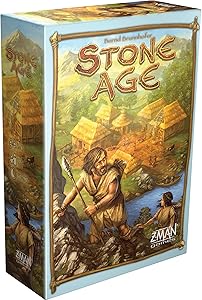
Stone Age is honestly the best worker placement games for kids because it teaches the core mechanic without overwhelming younger players. You're sending your workers (wooden tokens) to different locations to gather resources—food, wood, stone, gold—and using those resources to build tools and houses. The theme is clear, the decisions matter, and there's just enough luck (dice rolling for resource gathering) to keep games from feeling predetermined.
The game runs 60-90 minutes with 2-4 players, ages 10+. Setup is straightforward, and after one round, kids understand the flow. What makes it special is that each turn feels meaningful. You're constantly weighing whether to grab the immediate resources you need or block your opponent from a valuable location. There's also a farming mechanic where you feed your workers, adding a resource management layer that feels natural, not punishing.
The artwork is clean and functional rather than fancy, which means the board is easy to read during gameplay. The rulebook is solid—nothing confusing buried in unclear wording.
Who should skip this: If you want a game wrapped in a licensed IP or flashy theme, this won't deliver that. Stone Age is more "functional strategy" than "wow, look at this art." Also, if your kids are under 9, the complexity might be too much.
Pros:
- Clear introduction to worker placement mechanics
- Plays in a reasonable time frame
- Decisions feel consequential, not random
- Works well with both kids and adults
Cons:
- Art style is utilitarian, not flashy
- Luck element (dice rolls) can occasionally feel frustrating
- Plays best with 3-4 players; 2-player feels less dynamic
---
2. Dinosaur Island Board Game — Worker Placement with Creative Flair

Dinosaur Island is worker placement for kids who think dinosaur parks sound awesome. You're placing workers to research DNA, construct paddocks, and hire staff to run your park. The hook is that you're actually breeding and placing dinosaurs on your personal player board, so you're building something visible and tangible throughout the game.
At $51.23, it's among the best worker placement games for kids because it combines strategic placement with what feels like a creative project. The dinosaur artwork is vibrant—kids actually care about their park's appearance. Games run 60-120 minutes with 1-4 players, ages 8+. Yes, it supports solo play, which is rare in worker placement games and genuinely useful if your kid wants to play alone or practice before facing competition.
The theme ties directly to the mechanics. Placing a worker on "Research" gives you dinosaur DNA cards. "Construction" builds park attractions. "Marketing" draws visitors. Every action feels thematic rather than abstract. That connection helps younger kids understand why they're making certain choices.
The catch: rulebook can feel dense on first read, though once you play a round, things click. Also, games can run long if players overthink—set a timer or you'll be playing into the evening.
Who should skip this: If you want quick 30-minute games, Dinosaur Island won't fit. Also, if your kid isn't into dinosaurs, the theme won't carry the complexity.
Pros:
- Exceptional theme integration with mechanics
- Solo mode for independent play
- Player boards make your progress visible and satisfying
- Artwork is genuinely engaging for kids
Cons:
- Higher learning curve than Stone Age
- Playtime can stretch beyond 120 minutes
- Rulebook benefits from a tutorial video or experienced player teaching
---
3. Azul Board Game — The Accessible Alternative

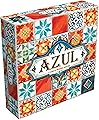
Azul isn't a traditional worker placement game—it's tile placement with a drafting mechanism—but it belongs in this conversation because it's the best worker placement games for kids ages 8 and up who aren't ready for deeper strategy yet. You're selecting colored tiles to create patterns on your personal player board. Simple rules, beautiful components, and games finish in 30-45 minutes.
At $34.39, it's the cheapest option here, and honestly, that value matters if you're testing whether your kid is ready for strategy games. Azul won an award (Spiel des Jahres, basically the Oscars of board games), so quality is proven. The tiles feel good to handle, the game board is stunning, and every decision matters—block your opponent or take what you need.
The catch is it's not strictly worker placement in the traditional sense. There's no workers moving around a board. But if you're introducing kids to turn-based strategy and resource competition, Azul teaches those concepts perfectly without overwhelming anyone.
Who should skip this: Older kids (14+) who've already played several strategy games might find it too lightweight. Also, if they're set on the "place workers, collect resources" experience, Azul won't deliver that.
Pros:
- Lowest price point—easy entry investment
- Award-winning design means excellent quality
- Plays fast (30-45 minutes)
- Beautiful components kids actually care about
- Perfect for ages 8+
Cons:
- Not a true worker placement game mechanically
- Limited player interaction depth
- Less "managing an economy" and more "pattern building"
---
4. Five Tribes Board Game — For Experienced Strategy Players

Five Tribes uses a mancala mechanic (distributing tokens like the classic cup-and-ball game) to determine worker placement moves. You're moving tribes across tiles representing the Sultanate of Naqala, then placing your tribes to control regions and claim resources. It's sophisticated—the best worker placement games for kids involve forward planning, and Five Tribes forces you to calculate three moves ahead.
At $56.46 and rated ages 13+, this is for experienced players or kids who've mastered simpler games. Games run 40-80 minutes with 2-4 players. The depth comes from the fact that every move affects what placement spots are available next. You can't just "lock in" a decision—the board state shifts each turn. That demands real strategic thinking.
The theme (controlling sultanate regions) is less immediately engaging than dinosaurs, but the mechanical elegance compensates. Players who enjoy puzzle-like games and don't mind feeling like they made a wrong call will love this.
Who should skip this: Younger kids (under 13) will struggle. Also, if you want clear turns and simple cause-and-effect, Five Tribes feels too interconnected and can create analysis paralysis in some players.
Pros:
- Genuine strategic depth and replayability
- Mancala mechanic is novel and satisfying
- Plays in a reasonable timeframe despite complexity
- Works great with experienced gamers of all ages
Cons:
- Steeper learning curve than other options
- Can lead to "analysis paralysis" with indecisive players
- Theme doesn't resonate with younger kids
- Limited interaction between players (mostly blocking)
---
5. Everdell Board Game — The Beautiful Option

Everdell combines worker placement with tableau building in a forest setting where you're constructing a city of creatures and trees. At $59.98, it's the most expensive option here, but the physical production quality justifies it. The game board is a tree-shaped structure with cards depicting adorable woodland creatures. Kids genuinely want to hold and place these cards.
Games run with 1-4 players, ages 14+, for 40-80 minutes. The worker placement here is gentler than Five Tribes—you place workers to collect resources, then use those resources to attract creatures to your growing tableau. It feels less competitive and more like everyone's building something cool together, even when you're all competing.
The real value of Everdell is presentation. If your kid is the type who cares about how games look and feel, this delivers. The artwork is consistent and charming. Components are high quality. It's a game you'll be happy to leave on display.
Mechanically, it's solid but not revolutionary. The worker placement bit is straightforward. The depth comes from planning which creatures you want to attract and when. Experienced gamers might find it lighter than expected, but teens and family groups will enjoy it.
Who should skip this: If budget is tight, the higher price makes it hard to justify over Stone Age or Dinosaur Island. Also, if your kid couldn't care less about presentation, spending extra for aesthetics doesn't make sense.
Pros:
- Stunning visual presentation and component quality
- Welcoming and less confrontational than pure worker placement games
- Solo mode included
- Great for mixed-age family groups
Cons:
- Most expensive option
- Less strategic depth than Five Tribes or Stone Age
- Worker placement rules are simpler, so less to learn strategically
- Plays best with engaged players; less punishment for suboptimal moves
---
How I Chose These
I evaluated each game on five criteria: accessibility of rules (does it teach worker placement mechanics clearly?), engagement for kids (does the theme hold their attention?), strategic depth (do choices matter, or is it mostly luck?), playtime (does it fit realistic game sessions?), and value (is the price justified by what you get?).
I also weighted age recommendations heavily. Azul works at 8+, Stone Age at 10+, Dinosaur Island at 8+, Five Tribes at 13+, and Everdell at 14+. This range means there's genuinely something for different developmental stages. I excluded games that required adult mediation or felt more like "kid games" than games kids and adults enjoy together.
Finally, I checked replayability. The best worker placement games for kids are ones you'll actually play more than once or twice. Games with variable setups, catch-up mechanics, or multiple viable strategies tend to stick around in family game collections.
---
Frequently Asked Questions
What's the difference between worker placement and tile placement?
Worker placement games have you controlling characters or tokens that you send to specific board locations to perform actions—like Catan or Stone Age. Tile placement games (like Azul) have you selecting and positioning tiles to build patterns or structures. Worker placement generally involves more long-term planning and blocking opponents.
Can these games work with two players?
Most of them do, though some play better at higher player counts. Everdell and Dinosaur Island explicitly support solo play. Five Tribes works fine with two players. Stone Age and Azul are playable but more competitive with 3-4 players.
Which game teaches strategy best?
Stone Age is the purest teacher because it isolates the worker placement mechanic and doesn't overcomplicate it. Five Tribes teaches advanced strategy but requires prior game knowledge.
Are these games actually fun for kids, or just educational?
All five are genuinely fun. The strategy elements are there, but the themes (dinosaurs, forests, ancient civilizations) and mechanics (resource gathering, tile placement) create games kids want to play again. They're not "educational games" in the sense that learning is the goal—strategy and engagement are.
---
The right worker placement game for your kid depends on their age, patience for rules, and what theme captures their imagination. Start with Stone Age or Azul depending on age, and work up to Five Tribes or Everdell as they gain experience. If you also enjoy strategic competition, check out our strategy board games for more recommendations that span different mechanics and complexities.
Get the best board game picks in your inbox
New reviews, top picks, and honest recommendations. No spam, unsubscribe anytime.
More in Strategy
The Best Engine Building Games of 2026: 5 Excellent Choices That Actually Deliver
Engine building games are genuinely addictive because they give you that satisfying progression feeling—you start with almost nothing, then gradually...
Best Euro Games for Kids in 2026: Top Picks for Family Game Night
Euro games—those elegant, strategy-focused board games from European designers—are perfect for kids who want more than dice-rolling luck.
The Best Strategy Board Games for 6 Players in 2026
Finding the right board game for exactly six players is trickier than it sounds. Too many games max out at four or five, forcing awkward house rules.