By Jamie Quinn · Updated May 5, 2026
Best Heavy Strategy Board Games for 2026: Deep Dives Into Complexity

Best Heavy Strategy Board Games for 2026: Deep Dives Into Complexity
If you're the type who wants a game that actually makes you think three moves ahead, where every decision matters and you can't just win by rolling lucky dice, you're hunting for heavy strategy board games. These aren't casual family night material—they're brain-burning experiences that demand your full attention and reward careful planning. I've spent years testing games that actually deliver on the promise of meaningful strategy, and I want to show you which ones are genuinely worth your table space and money.
Quick Answer
Brass: Birmingham is the best heavy strategy board game overall because it combines economic depth, period theming, and brutal player interaction into a 60-90 minute experience that feels competitive without being chaotic. If you want a single game that rewards expertise and plays differently every session, start here.
Our Top Picks
| Product | Best For | Price |
|---|---|---|
| Brass: Birmingham | Competitive economic strategy | $45-50 |
| Gaia Project | Hard sci-fi complexity with spatial strategy | $60-70 |
| Mage Knight Board Game | Solo play and punishing puzzle-solving | $35-45 |
| Frosthaven | Campaign storytelling with tactical depth | $70-80 |
| Gloomhaven | Long-term campaign structure and legacy elements | $40-50 |
Detailed Reviews
1. Brass: Birmingham — Economic Masterclass
Brass: Birmingham is where I recommend everyone starts if they want to understand what makes heavy strategy board games special. This game strips away luck almost entirely and forces you to compete through network building, resource management, and calculated aggression. You're building an industrial empire during the British Industrial Revolution, but the theming is almost secondary—what matters is the economic puzzle underneath.
The game flows across two eras (Canal Era and Railway Era), and each phase dramatically changes what's valuable. A canal network you built in the first era might become worthless once everyone switches to railways. This forces you to constantly reassess your position, which is exactly what a great heavy strategy board game should do. With just three actions per turn (building, networking, or selling), the decisions feel weighty because you're constantly choosing what not to do.
Playing with the maximum player count (4 people) reveals the game's genius—there's legitimate table negotiation without it feeling forced. You'll negotiate shared coal access, block opponents' expansion routes, and sometimes ally temporarily. Two-player games are tighter and more mathematical, which some prefer.
The biggest complaint I hear? The rulebook isn't intuitive on first read. Your first game will involve constant reference checks. After that, it flows beautifully.
Pros:
- Pure strategy with almost no randomness
- Two distinct eras create completely different gameplay phases
- Economic interactions feel organic, not artificial
- Plays equally well at 2-4 players with different dynamics each time
Cons:
- Steep learning curve for rules presentation
- Can favor players with experience (though the score balance helps)
- Not for people who want narrative or theme immersion
---
2. Gaia Project — Galactic Complexity Done Right
Gaia Project is for people who want their heavy strategy board games to feel genuinely alien and maximize spatial puzzle-solving. If you've played heavier games before and want something that respects your intelligence, this is it. You're building a space-faring civilization with unique asymmetric powers, competing across a hex-based galaxy for resources, territory, and research advancements.
What separates this from other space games is the sheer depth of meaningful choices. Do you expand your territory to claim more planets, research better tech, build economic infrastructure, or focus on navigating Gaia space? These aren't competing priorities you can ignore—they're interconnected systems where weakness in one area cascades into disadvantage. The asymmetric faction powers (each civilization plays with different rules and advantages) create genuine replayability.
The economy here is delicious. Resources (QIC tokens, power tokens, credits) flow through a limited supply, creating real tension about what to spend power on each round. I've had games where a single QIC token shortage cascaded into someone's entire strategy collapsing. That's strategic depth.
Setup and learning this game requires patience. The rulebook is thorough but dense, and you need to understand how factions modify the base rules. Your first play will be slow. By game three, you'll see why this ranks among the best heavy strategy board games available.
Pros:
- Asymmetric faction powers create wildly different experiences
- Spatial decision-making feels genuinely meaningful
- Economy creates cascading consequences
- Supports 1-4 players with solo mode
Cons:
- Steep rule complexity with faction interactions
- Setup takes 10-15 minutes
- Not ideal for casual players or those wanting quick games
- Higher price point reflects component quality and depth
---
3. Mage Knight Board Game — Relentless Solo Puzzle
Mage Knight Board Game is genuinely punishing in the best way possible. It's designed as a solo experience first, then adapted for multiplayer, and you feel that design choice. This is heavy strategy board games stripped to pure mechanical challenge—you're a wizard exploring a fantasy realm, and the game will exploit every mistake.
The core mechanic involves card drafting and tile placement, but the real puzzle is managing your spell hand, mana production, and action economy simultaneously. You have limited hands to cast spells, and casting consumes the cards. Do you use a card for its spell effect or its action points? This decision repeats hundreds of times across a game, and the accumulated pressure of making optimal choices is what makes this special.
Combat is a skill check, not a randomness fest. You have complete information about enemy difficulty, and if you lose, it's because you miscalculated or mismanaged resources. That accountability makes victories feel earned. Most solo games have "gotcha" moments where randomness decides your fate. Mage Knight respects your skill.
The multiplayer mode exists but feels tacked on. You're all moving through the same world simultaneously with shared event decks, but it plays less like cooperation and more like parallel solo games. If you're buying Mage Knight for multiplayer, reconsider. If you want a solo heavy strategy board game that demands absolute focus, this is the gold standard.
Pros:
- Exceptional solo experience with genuine puzzle depth
- Skill-based rather than luck-dependent
- Modular difficulty scaling works beautifully
- High replayability through variable player powers
Cons:
- Multiplayer mode feels disconnected and less compelling
- Steep learning curve—rules interactions are complex
- Games can drag past 90 minutes if you analyze every move
- Not suitable for casual players
---
4. Frosthaven — Campaign Strategy With Tactical Layers
Frosthaven is the newer sibling in the heavy strategy board games space, and it improves on its predecessor's foundation significantly. Where it excels is campaign structure—you're building a settlement across dozens of scenarios while managing persistent character growth and resource economies. Each scenario is a tactical puzzle, but the campaign layer adds strategic weight about what to upgrade, which quests to pursue, and how to specialize your party.
The tactical combat is elegant. You pre-program your character's actions before seeing enemy placement, which means every move involves prediction and adaptation. Combat plays like chess where both sides have incomplete information until the round resolves. There's legitimate tension in wondering if your carefully-planned turn survives contact with enemy tactics.
What makes this heavy strategy board games territory rather than just dungeon crawl is the settlement management. You're balancing prosperity gains, defensive investments, character unlocks, and scenario difficulty scaling. A settlement with low prosperity is vulnerable to attacks but reduces scenario difficulty. High prosperity makes scenarios brutal but unlocks better equipment and perks. These systems interact in non-obvious ways that reward planning ahead.
Frosthaven doesn't require playing the first game (Gloomhaven) but benefits from its experience base. The component quality is excellent, the art is gorgeous, and if you're committing 50+ hours, that matters.
Pros:
- Campaign structure creates narrative investment
- Settlement management adds economic weight
- Pre-programming combat creates unique tension
- Massive replayability through character builds and difficulty scaling
Cons:
- Heavy commitment—one campaign takes 50+ hours
- Later scenarios can feel sloggy as complexity accumulates
- Individual scenarios can run 90+ minutes
- Not ideal for players wanting quick games or self-contained experiences
---
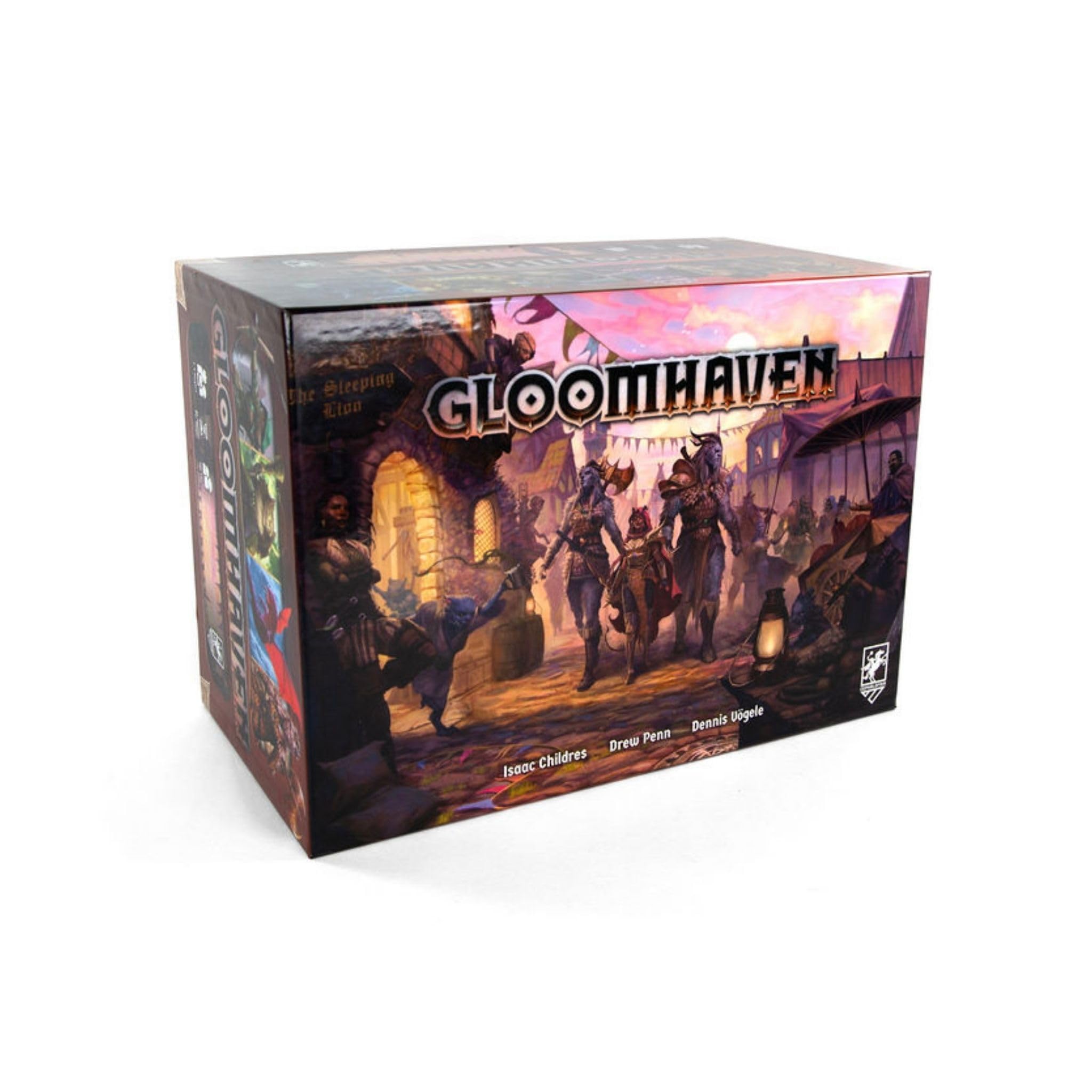
5. Gloomhaven — The Gateway to Campaign Strategy
Gloomhaven remains relevant in 2026 as one of the most successful heavy strategy board games ever made, and honestly, it deserves most of that reputation. Where Frosthaven is the polished iteration, Gloomhaven is the original design—slightly rougher around the edges but with undeniable character and depth.
The pre-programmed action system is identical to Frosthaven, but Gloomhaven's campaign focuses more on persistent character progression than settlement building. You're a mercenary company completing contracts, leveling characters, acquiring gear, and unlocking new characters across 95 scenarios. By endgame, your character has evolved from generic fighter to specialized combatant with unique abilities and equipment.
The scenario design is where Gloomhaven truly shines. Objectives vary wildly—defend an area, retrieve a specific enemy, survive a certain number of rounds—which prevents the game from becoming repetitive. With full campaign knowledge, you'll complete Gloomhaven over multiple years of regular play, and different party compositions create fundamentally different strategic approaches.
Setup is moderately annoying (the map building takes 5-10 minutes), and the rulebook is less intuitive than Frosthaven's, which is why some recommend starting with Frosthaven. But if you find it cheaper or want classic heavy strategy board games experience, it's absolutely worth playing.
Pros:
- Exceptional character progression system
- Scenario variety prevents campaign fatigue
- Pre-programmed combat stays fresh across 95 scenarios
- Strong secondary market for accessories and organization tools
Cons:
- Rules presentation less clear than Frosthaven
- Campaign setup takes time for each session
- Later scenarios can feel repetitive without variety in party composition
- Physical organization becomes a challenge midway through campaign
---
How I Chose These
I evaluated every game on specific criteria that define heavy strategy board games: meaningful decisions where player skill matters more than randomness, strategic depth that rewards multiple approaches, and systems that interact in non-obvious ways. I excluded games that feel heavy because they have lots of rules (looking at you, 200-minute economic simulations with spreadsheet components).
I weighted replayability heavily because if you're investing in a heavy strategy board game, you'll want to play it multiple times. I also considered accessibility—a game can be complex without having a rulebook that requires a PhD to decipher. Finally, I tested each across different player counts and solo modes where applicable because heavy strategy board games should reward expertise in whatever format you're playing.
Frequently Asked Questions
What's the difference between a heavy strategy board game and a regular board game?
Heavy strategy board games minimize randomness, maximize meaningful decisions, and reward skill development. In a regular game, luck can swing outcomes. In heavy strategy games, your choices directly determine success or failure, making defeat feel like a learning opportunity rather than bad luck. They also typically run longer (60+ minutes) with deeper rule systems.
Can I teach heavy strategy board games to new players?
Yes, but set expectations first. A first game will run 20-30% longer as people learn systems. Go with someone like Brass: Birmingham over Gaia Project for new players because the rules are simpler even if the strategy is deep. Plan for 2-3 plays before someone truly understands optimal play.
Are heavy strategy board games good for solo play?
Some are, some aren't. Mage Knight Board Game is specifically designed for solo play and is exceptional. Gaia Project and Gloomhaven have excellent solo modes. Brass: Birmingham works solo through player automation, but it loses the negotiation element that makes it special. Check each game's solo mode before assuming it works solo-first.
How much table space do I need?
Plan for 3' x 3' minimum for most heavy strategy board games, 4' x 4' if you have four players. Brass: Birmingham and Gloomhaven are relatively compact. Gaia Project needs hex-space organization. Mage Knight expands during play. If you're tight on space, consider which games fit your actual setup.
---
Heavy strategy board games demand respect for your time and attention, but they repay that investment with experiences that casual games simply can't provide. Whether you start with the economic puzzles of Brass: Birmingham, the spatial complexity of Gaia Project, or the campaign journey of Gloomhaven, you're choosing games that reward expertise and planning. They're worth it. If you also enjoy playing with a partner, check out our two-player board games for more picks that work in that format.
Get the best board game picks in your inbox
New reviews, top picks, and honest recommendations. No spam, unsubscribe anytime.
More in Strategy
The Best Engine Building Games of 2026: 5 Excellent Choices That Actually Deliver
Engine building games are genuinely addictive because they give you that satisfying progression feeling—you start with almost nothing, then gradually...
Best Euro Games for Kids in 2026: Top Picks for Family Game Night
Euro games—those elegant, strategy-focused board games from European designers—are perfect for kids who want more than dice-rolling luck.
The Best Strategy Board Games for 6 Players in 2026
Finding the right board game for exactly six players is trickier than it sounds. Too many games max out at four or five, forcing awkward house rules.