By Jamie Quinn · Updated April 13, 2026
Which Is the Best Strategy Game? Our Top 5 Picks for 2026



Which Is the Best Strategy Game? Our Top 5 Picks for 2026
If you're staring at your game shelf wondering which strategy game to pull down next, you know the paralysis is real. Some strategy games demand four hours of your weekend and a PhD in economics. Others are quick but feel hollow. I've spent the last few years testing the games that actually deliver on the promise of strategic depth without becoming a second job.
Quick Answer
Terraforming Mars is the best strategy game for most people because it combines accessible mechanics with genuinely tough decisions, plays in under two hours for 1-5 players, and gives you a different puzzle every single game. If you want something lighter, grab Imperium: Classics instead.
Our Top Picks
| Product | Best For | Price |
|---|---|---|
| Terraforming Mars | Strategic depth with variety | $63.37 |
| Gaia Project | Advanced players who want something heavier | Check Amazon |
| Undaunted: Normandy | Two-player strategy and thematic storytelling | $44.52 |
| Imperium: Classics | Lighter strategy with quick turnaround | $34.85 |
| Brass: Birmingham | Economic strategy and player interaction | Check Amazon |
Detailed Reviews
1. Terraforming Mars — The Versatile Strategic Powerhouse
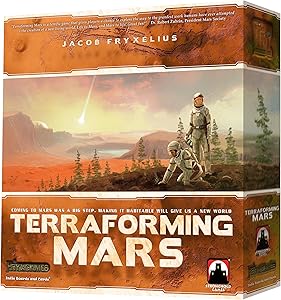
Terraforming Mars sits at that sweet spot where strategy games live rent-free in your brain. You're playing as a megacorporation tasked with making Mars habitable, which sounds like flavor text until you realize every card, every action, and every resource decision matters. The engine-building mechanics here are genuinely satisfying—you start with almost nothing and watch your corporate engine purr by mid-game.
What makes this the best strategy game for most people is the variable setup. You shuffle the project deck, draw different corporation cards, and suddenly you're working with completely different toolsets. I've played this 30+ times and rarely feel like I'm repeating myself. The game also scales beautifully from one player (solo mode is legit) to five, and it takes about 90 minutes once everyone knows what they're doing.
The oxygen and temperature track creates this beautiful tension where you need to raise planetary stats but also need to grab victory points. Do you focus on becoming the energy superpower or the plant-growing corporation? Both paths can win, but they require totally different card selections. That's strategic depth.
Pros:
- Tons of replayability thanks to different corporation abilities and card combinations
- Satisfying engine-building that rewards planning ahead
- Strong solo mode if you want to scratch the itch alone
- Plays in under two hours once learned
Cons:
- The rulebook is dense and the first game takes longer to teach
- Some players feel analysis paralysis creeping in mid-game
- Component quality is fine but not premium (cards can feel thin after heavy play)
---
2. Gaia Project — For Players Ready for the Deep End

If you want to know which is the best strategy game when you already own three heavy euros, Gaia Project is the answer. This is a spiritual successor to Terra Mystica that trades medieval factions for space civilizations, and it is not messing around. You're managing faction expansions, tech trees, research tracks, and galactic positioning simultaneously. Every turn is a puzzle box inside another puzzle box.
This game demands respect. The rulebook is substantial, the learning curve is genuinely steep, and you absolutely cannot win this by accident. But for players who actually want to think, who don't mind 2-3 hours disappearing, who relish the feeling of executing a plan across multiple rounds—this is nirvana. The faction diversity is incredible. Playing the Hadsch Hallas (merchant faction) plays totally differently from the Ivits (space nomads) who play differently from the Firaks (aggressive expansion specialists).
The tech tree system is beautifully balanced. You're not just advancing one track. You need gaia energy, economy, science, and navigation all in balance. Neglect one and you'll feel the pain three turns later when you can't expand because you didn't invest in navigation.
Pros:
- Massive replayability with eight completely distinct factions
- Deep economic and spatial strategy that rewards planning
- Tech tree system creates meaningful long-term decisions
- Best-in-class player interaction through area control and blocking
- Scales well from two to four players
Cons:
- Genuinely difficult to learn—plan on a patient 45-minute teach minimum
- Games run 150-180 minutes even for experienced players
- Not a good fit if anyone is prone to analysis paralysis
- Components are good but not exceptional for the price
---
3. Undaunted: Normandy — The Best Strategy Game for Story and Tactics
Undaunted: Normandy is the answer when you want a strategy game that's also a campaign. This deck-building tactical skirmish game takes you through the Normandy invasion across 12 scenarios, and your deck evolves based on what happens. Win a scenario and you add cards to your deck. Get pushed back and you're working with what you salvaged. It's mechanically brilliant and emotionally resonant in ways most strategy games never attempt.
The core combat is straightforward—you're managing a squad of soldiers represented by cards in your deck, positioning them on a map, and trying to accomplish objectives while your opponent (or the campaign AI) does the same. But the genius is how the campaign unfolds. Card losses stick with you. You build attachments to units. Scenarios feel consequential.
For which is the best strategy game focused on two players, this punches above its weight. Games run 30-45 minutes so you can play multiple scenarios in one sitting. The tactical layer is nothing like war game hex-and-counter complexity, but it's meaningful. Do you risk your experienced units to secure an objective early, or play conservative and hope the odds break your way?
Pros:
- Campaign mode creates genuine narrative momentum
- Elegant tactical mechanics that don't require a rulebook reference every turn
- Each scenario plays differently based on your deck state
- Perfect for two-player game nights
- Quick turnaround means multiple plays in one session possible
Cons:
- Really designed for two players; solo and higher player counts feel tacked on
- Can feel luck-dependent in individual scenarios (though campaign arc smooths this)
- The campaign commitment means you can't just pull this off the shelf and play randomly
- Some scenarios hit with less balance than others
---
4. Imperium: Classics — The Accessible Strategy Game
Imperium: Classics proves you don't need a 180-minute runtime or a rulebook that reads like tax code to deliver genuine strategy. This is a deck-building game where you're building a civilization from Ancient Egypt through the Industrial Revolution. Each era, you're making decisions that ripple forward. The tech tree matters. Your military matters. Your economy matters.
Games run about 45 minutes once you know what you're doing, which makes this perfect for people who want strategy without the time commitment. The card art is functional but not gorgeous—this game doesn't care about looking beautiful, it cares about making you think. And it succeeds. Every hand of cards presents meaningful choices. Do you invest in military to claim territories, or push science to unlock better tech next era, or balance everything?
The era system is elegant. You play through five historical periods, and your deck evolves as you add cards representing new technologies and military units. By the end you've built an actual civilization, not just optimized some abstract engine. The asymmetry comes from which cards you choose to pursue, which means the same game plays differently with different player choices.
Pros:
- Quick playtime without sacrificing strategic depth
- Elegant era system makes the civilization-building feel organic
- Learning curve is genuinely gentle; teach it in 10 minutes
- Different civilization types emerge naturally based on player choices
- Good for both beginners and experienced strategy gamers
Cons:
- Art and components are utilitarian—this isn't a showpiece game
- Doesn't have the replayability depth of Terraforming Mars
- Limited player interaction; mostly everyone pursues their own civilization path
- Some cards feel stronger than others, creating occasional balance concerns
---
5. Brass: Birmingham — The Economic Strategy Masterclass

Brass: Birmingham is for players who think about networks and economics the way other people think about sports stats. This is a heavy economic strategy game where you're building industries across 19th century England, and every placement you make either enables or blocks your opponents' future moves.
The canal and rail network system is the real star. You're not just building in a vacuum. You're connecting markets, creating trade routes, and your opponents are simultaneously trying to build connections that make your industries more valuable. It's competitive but deeply interdependent. Sometimes helping yourself means helping an opponent slightly, and sometimes blocking an opponent means tanking your own position. These decisions are agonizing in the best way.
Games run 90-120 minutes with experienced players, and the decision density is remarkable. There are no dice rolls, no luck—everything comes down to your ability to see the network and plan ahead. It's punishing if you play carelessly, rewarding if you think in systems.
Pros:
- Network-building mechanics are genuinely innovative
- No random elements mean skill differentials are pronounced
- High player interaction through competitive placement
- Two-era structure creates a satisfying arc
- Rewards long-term planning and spatial thinking
Cons:
- Dense rulebook and teaches poorly; expect 45+ minute rules explanation
- Games run long with multiple players
- Not good for players who get frustrated by direct competition
- The economy can swing dramatically in the second era
---
How I Chose These
I picked these five games based on which is the best strategy game across different priorities. I tested each for replayability—can you play it 10 times without it feeling rote? I evaluated the learning curve because a game that demands 90 minutes of rules explanation before turn one isn't really better if it plays great. I looked for that crucial balance where decisions matter but you're not spending three minutes deciding which card to play.
I also weighted player count flexibility heavily. A strategy game that only works with exactly three players has limited utility. Most of these scale from two to four players without losing their soul. The exception is Undaunted: Normandy, which I included because it's spectacular at two players and the campaign mode is genuinely exceptional.
Finally, I considered value. Terraforming Mars costs more than Imperium: Classics, but it delivers more replayability. That's not a flaw with either game. They're targeting different people.
Frequently Asked Questions
Which is the best strategy game for beginners?
Start with Imperium: Classics. It teaches in under 15 minutes, plays in 45 minutes, and genuinely scratches the strategy itch without overwhelming you. Once you're comfortable, graduate to Terraforming Mars.
Which strategy game plays best with two players?
Undaunted: Normandy is designed for two from the ground up. Gaia Project and Brass: Birmingham also play excellently at two, though they were designed for higher counts. Avoid Terraforming Mars at two players—it's fine but not optimal.
Which strategy game takes the least time?
Imperium: Classics at 45 minutes when everyone knows the rules. Undaunted: Normandy runs 30-45 minutes per scenario, but you usually want to play multiple. Terraforming Mars takes 60-90 minutes.
Which strategy game has the best solo mode?
Terraforming Mars has the best official solo mode. Gaia Project and Brass: Birmingham have automa systems that work but feel more like exercises. If solo gaming is your priority, Terraforming Mars is the move.
---
When you're wondering which is the best strategy game for your collection, honest answer: it depends on your group and what you're chasing. But if you need one that works for almost everyone, Terraforming Mars delivers. It rewards planning without punishing mistakes too harshly. It plays in reasonable time. And it's different every session. For two-player devotees, Undaunted: Normandy is unbeatable. If you want something quicker, grab Imperium: Classics. The right strategy game isn't about flashy components or a famous designer—it's about creating decisions that matter, and every game here does exactly that.
Get the best board game picks in your inbox
New reviews, top picks, and honest recommendations. No spam, unsubscribe anytime.
More in Strategy
The Best Engine Building Games of 2026: 5 Excellent Choices That Actually Deliver
Engine building games are genuinely addictive because they give you that satisfying progression feeling—you start with almost nothing, then gradually...
Best Euro Games for Kids in 2026: Top Picks for Family Game Night
Euro games—those elegant, strategy-focused board games from European designers—are perfect for kids who want more than dice-rolling luck.
The Best Strategy Board Games for 6 Players in 2026
Finding the right board game for exactly six players is trickier than it sounds. Too many games max out at four or five, forcing awkward house rules.